

Transcription
Retransmission de la présentation
Suivez la présentation à Bruxelles de la première édition du scénario « EDF 2050 Net Zero » mettant en lumière les décisions qui doivent être prises aujourd’hui pour atteindre la neutralité carbone d'ici 2050 comme l'Europe s'y est engagée. [Version anglaise exclusivement]
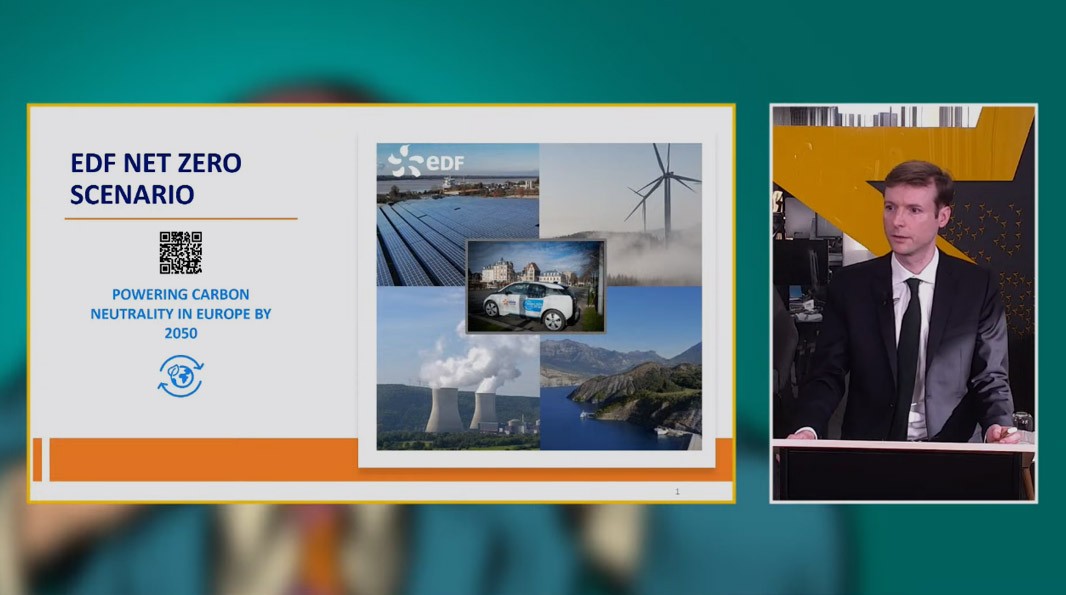
Votre navigateur ne prend pas en compte le javascript.
Pour vous permettre d'accéder à l'information, nous vous proposons de consulter la vidéo Powering Carbon Neutrality by 2050: EDF’s Net Zero scenario unveiled dans un nouvel onglet.
7:14
hello everybody we're going to go ahead and get started welcome to everybody here in the room and also to those of
7:22
you joining us online for today's event powering carbon neutrality by 2050 my
7:29
name is is Dave keting I'm a journalist based here in Brussels and I'm coming at you live from the heart of the EU quarter in the eactive studios just next
7:38
to the European Council Summit where the 27 national leaders of the EU are busy in their discussions and we know that
7:46
over the past two years or past three years really a lot of those discussions have revolved around energy energy has
7:54
really propelled to the Forefront of the big political discussions in Europe so much so that the fact that energy is
8:02
missing from their agenda today is actually remarkable in and of itself but that doesn't mean the discussion isn't happening because of course just across
8:10
town we had the nuclear energy Summit that was convened by the Belgian presidency which saw a huge number of
8:17
national leaders speaking there talking about the future trajectory of energy particularly when it comes to nuclear
8:25
but of course we know nuclear is not the only energy issue that people are discussing people are wondering how do we increase the eu's energy security and
8:35
how do we combat climate change in the most coste effective and sensible way now we know we've just had this whole
8:42
raft of EU legislation adopted as part of the fit for 55 package which implements uh EU president Ursula Fan's
8:51
green deal and so now people are thinking what's next we've got a big implementation period coming up in front of us and people are wondering how do we
9:00
meet these ambitious goals that have just been set and so as this debate unfolds about that future trajectory it
9:09
becomes more and more clear that the path to realizing this vision is Laden with intricate challenges and this
9:17
Demands a meticulous examination of the economic industrial and social considerations involved So today we're
9:26
going to talk about what is needed to develop the technology IES to get to Net Zero and facilitate the decarbonization
9:33
of every sector of our economy and during this event French utility EDF will share its most recent scenario and
9:41
vision of the necessary steps ahead so to get us started I would like to welcome to the podium Marian laatu who
9:48
is EU Affairs director for EDF Marian uh welcome and uh thanks for uh
9:58
coming here to discuss our EDF scenario uh it's actually the first time that EDF will present in a public manner a net
10:07
zero uh scenario so we are actually very excited today to have this presentation for the first time uh here in Brussels
10:15
lots of analysis and lots of modeling has gone into producing this scenario and I would like to uh extend a hurtful
10:23
thanks to the colleagues from the strategy division all the analysts and the management who threw a huge amount of work work in preparing uh for uh this
10:32
event why are we uh doing this and doing this now U so we're all preparing for the next European uh cycle uh the work
10:41
on the trajectory to reach Net Zero at the European level is uh starting we've all seen the communication from the European Commission on the 2040 uh
10:50
Milestone so we feel it's the right time uh to discuss and identify the key levs and the elements of the regulatory
10:58
framework that we enable the market developments the Investments and also the behavioral changes that will take
11:06
the EU to uh Net Zero um so why us well EDF is the European leader in decarbonized electricity we're actually
11:15
the global leader in decarbonized electricity 39 or 37 grams of CO2 per kilowatt hour in 2023 that's actually um
11:23
very very low so we want to cheap in today in an open uh way um and present this EDF uh scenario today is a very
11:32
special day um there is a historical nuclear Summit here in Brussels that shows that nuclear is definitely back in
11:39
the game today in Bilbo we also have the wind Europe conference where they announced this morning that Investments have doubled in wind power in 2023 and
11:48
that permitting is also on the rise so we see some very interesting synergies there but I will not spoil uh the uh
11:57
scenario thanks to all the high level panelists who accepted to Kickstart this debate and we will of course be very happy to follow up with all the
12:05
stakeholders and policy makers in town but also um outside of town to discuss more in detail uh our findings and uh
12:13
and and this scenario I would like to conclude but conclude the conclusion uh the the introduction sorry uh by saying
12:21
that um our conviction at EDF is that the EU must stay on course in the fight against climate change in a very
12:29
determined and steady way um so with this uh thank you very much for being here for engaging with us and I leave
12:36
the floor to the speakers thanks thanks very much Marian okay so
12:44
now we're going to get to the presentation two notes before we get to that first of all on your seats you will have had this uh piece of paper there
12:52
there's a QR code on it so if you want to access the slides that are about to be presented um if for instance it's easier for you to read than the screen
13:00
just scan that scroll down to the bottom and you can see a place where you can download the slides from the presentation also you're going to be
13:07
able to ask your questions about the presentation by putting them into slido that's the way we're going to do all questions here today so if you see this
13:16
QR code on the screen go ahead and scan it with your smartphone and you can put in questions on there I'll read them out to the panelists so if you have specific
13:24
questions about the presentation make that clear in your uh question and I'm going to put them uh to charl who we here here from in just a moment after
13:33
the presentation again that's for technical questions about the presentation then there will be an opportunity for more general questions
13:40
about the topics discussed at the end of the panel uh so you can go ahead and start putting those questions in now and I'll put them to whoever you have
13:49
directed them to so enough of that let me now introduce charl way who is the chief Economist for the EDF who is going
13:57
to walk us through this sh so thank you very much Dave for this
14:08
and thank you all for participating to this discussion so the first part of this event is to actually share with you
14:17
the results of our detailed analysis on how to reach Net Zero the starting point
14:24
of our analysis is that it is not going to be easy there are a lot of challenges they you you mentioned it social ones
14:32
industrial ones economic ones and to be explicit there will be a cost an aggregate cost of the transition what we
14:41
imply from that is not that we should give up on climate ambition quite the opposite actually we are fully aware
14:48
that the alternative which is climate in action would be actually even costlier what we imply from that is that we need
14:55
to minimize the cost we need to be as cost effective as efficient as optimized
15:02
as possible to minimize the aggregate cost of the transition so this is what we are going to propose to you it is a
15:10
technical and an economic analysis an economic optimization to reach Net Zero in a
15:18
cost- effective way we build on the expertise of all EDF group build and this expertise is built
15:26
on studies but also on real world experience in the energy sector in electricity in particular but even more
15:34
broadly so let's start with a bird's eye view of our results what you see on the
15:40
slide on the left hand side is basically the pathway to reach Net Zero that gets out of our analysis we take it as a
15:49
given that we have to be Net Zero in 2050 it is an objective that we do not discuss it is about climate science
15:57
climate science tells us that we need to be atet zero at 2050 we take it for granted what we do is is that we
16:05
optimize under these constraints the way to basically minimize the cost of the transition what you see is that all
16:14
sectors will have to contribute so the burden sharing of that cost basically will have to affect all sectors and on
16:24
the right what you see is that the energy sector is at the heart of this transition is at the heart of the radical transformation we need and when
16:33
I when I say energy sector it is both the energy demand and the energy Supply so what you see on the right the key
16:40
figures of our scenario is going to be my run map I will go through each of those and before that a quick note on
16:49
methodology what we are doing is that we are modeling explicitly all the energy sector of 15 European countries so it's
16:59
not exactly eu27 we are including the UN the United Kingdom because it has a key
17:06
role to play in the energy transition for Europe as a world and we miss some countries of the eu27 but in terms of
17:14
order of magnitude what I say what I'm going to to say is valid for the eu27 as
17:22
a world second point is that we do take into account a number of feasibility constraints
17:29
that we it is a normative approach because we we take it as a given that we have to be Net Zero in
17:36
2050 that said we also take into account explicitly a number of physical
17:43
technological social constraints to make the the scenario as realistic as we can
17:50
third the optimization is basically driven by welfare maximization cost minimization but also resilience we we
17:58
want to build a resilient scenario to number of risk and what gets out of this modeling is basically the strategy on
18:07
the left hand side of the slide it's it is a strategy that relies on two pillars the first pillar is to reduce energy
18:17
demand because the best energy we could think of is the energy that we actually do not consume and the second pillar is to
18:25
produce the remaining energy we will need is in a fully decarbonized way so
18:34
let's start with the first pillar first pillar is how to reduce energy demand so to be precise it is final energy demand
18:41
it's like the the consumption of energy in our final users the bad news is that this final
18:50
energy demand is going to go up initially if we do not do anything else because of the general context because of microeconomics because of
18:58
demographics between 2021 towards 2050 the final energy demand will actually go up slightly up this is the first break
19:08
the red break to counteract this trend we actually need to activate three levels the first one is behavioral
19:17
changes the way we live the way we hit ourselves the way we move we can act on that we can change our way of life our
19:26
standards of living our habits that said we account for it only by 10% of the decrease we want to achieve why is that
19:35
because we want to stay realistic we are fully aware that it is also a sensitive issue politically socially so this is
19:43
why we are pretty conservative on the amount of behavior changes we are integrating in our scenario second level
19:52
electrification so this is the bulk of the decrease 60% of the decrease we are trying to achieve will come from
19:59
electrification electrification is a change of equipment is when you move from gas boiler to heat pumps when you
20:06
move from combustion cars to electric vehicle and when you do so you actually
20:13
slash your energy consumption because it is energy efficient to move towards electrification third electric Energy
20:22
Efficiency above and beyond electrification electrification is already an energy efficient ction but
20:29
above and beyond that you can still optimize you can still optimize your the way you hit yourself typically when you
20:37
renovate your house it it's actually energy efficient so all that is going uh to sum
20:45
up to minus 40% of energy demand focus on electrification priorities because as you've seen this
20:54
is a bulk of the the decrease so we need to to be very concrete and proactive on how to Electrify and here basically we
21:03
have three priorities three sectors we want to Electrify in priority the first two ones are all about massification so
21:12
for buildings and transportation the name of the game is to massify mature Technologies we know the Technologies is
21:19
basically electric vehicles not just light but also for heavy uh transportation and for buildings it is
21:28
basically heat pumps those two technologies do exist we need to deploy them to accelerate the deployment of
21:35
those Technologies all over Europe the third priority is actually about industry and here it is a different ball
21:42
game because here the Technologies do not exist yet at least they are not mature as mature as the former two ones
21:51
and still it is a priority because if we do not do that industry will reinvest into carbonized
21:59
processors and then they will be locked in because lifetime of those processes of those equipment are typically 20 to
22:06
30 years and so it will be too late we will miss the 2050 targets if we wait for the next reinvestment cycle to
22:16
decarbonize so my takeaway is that industry is also a priority for electrification along with buildings and
22:25
transportation now let's move to the second pillar energy Supply because as as we have seen we we have slashed our
22:34
final energy Demand by 40% there are still 60% of today's Final energy that
22:41
have to be addressed by energy production and this energy production will have to be fully
22:47
decarbonized so the first ingredient I'm going to put in our energy Supply mix are actually electrons because
22:56
here it is a double effect of the electrons not only they slash your energy demand but it
23:06
also uh Slash your CO2 emissions so typically we know how to decarbonize our power mix I will come back to that and
23:14
provided we do so it is a very very efficient from our climate standpoint energy vector and so this is why in our
23:22
scenario the share of electrons in our final energy demand will grow from 21%
23:29
today towards 57% in 2050 so this is a very high number it comes with changes
23:37
uh but this is the priority that said 57% is not 100% so the remaining 43%
23:46
will have to be addressed with other energy vectors other ingredients will have to put in our cocktail in our mix
23:53
to really reach Net Zero and fully decarbonized Energy Mix by 20 50 so the second ingredient I want to put in our
24:02
mix is heat heat is definitely not yet decarbonized but is
24:08
pretty easy to fully decarbonize by 2050 that said you know it is still a bit costly and there are physical
24:16
constraints so this is why the share of heat so basically heat you have geothermal Solutions typically and
24:23
District Heating and the share basically only increase from 4% to
24:30
7% third ingredient after electrons and heat are molecules and molecules will still have a major role to play in our
24:39
long-term decarbonized Energy Mix and here we can think of three types of molecules three types of technologies
24:48
that can fully decarbonize molecues production the first type are bioenergies biofuels so those ones are
24:56
great from an energy standpoint but they come with a challenge which is actually limited resources and conflict
25:04
of uses where when you use bio biomass for energy it is biomass that you do not use for other users and so this is
25:12
tricky and we need to be parimon we need to be targeted in our way we use bio energy second kind of decarbonized
25:21
molecule we can think of are synthetic molecules so molecules basically that we do produce use typically out of
25:31
electricity so hydrogen heat fuels derivatives from hydrogen ammonia are all in that category here it is a
25:40
solution and it has a role to play in our cocktail but it comes also with a challenge which is a high energy
25:48
requirement so the way we produce those synthetic molecules is actually costly in terms of energy and that will
25:56
translate into a cost in terms of omics of that solution so this is why also we are targeted in our use of molecules
26:03
this kind of molecules and we focus their use on International transportation and Industry as a fit
26:10
stock final and third uh type of decarbonized molecule we can think of are the actual fossil fuel molecules we
26:19
know today but combined with capture carbon and storage and in that case it
26:26
is conceivable it is it has a role to play in our mix but it also come with a challenge which is that CCS carbon
26:35
capture is not a mature technology yet plus we keep a dependency on fossil fuel
26:42
in that case to wrap up our cocktail so the fully decarbonized mix we have in
26:49
2050 is basically basically the one you you see on the right so 57% comes from electrification and the remaining 43%
27:00
comes from a cocktail of the other ingredients what I take away from that is that it is a no-brainer to push
27:07
electrons because we know this is fully efficient whereas for the the other ingredients there is a lot of
27:14
uncertainty in the respective share they will play in the fully decarbonized mix
27:20
so now let's dive into the production of electrons so this is a new mix so a new p
27:29
but this time it is the p on how to produce those electrons in a fully decarbonized way in our scenario we take
27:36
it as a given that it will be fully decarbonized plus we optimize the cost of producing those electrons so this is
27:46
why what you see not only the pi is growing actually there increase of plus
27:53
80% of per production from 2021 towards 2050 so it is a massive increase in
28:01
power production and it is also a massive change in the share of the different Technologies typically today
28:09
60% of our power mix is decarbonized which is not too bad so we should pride ourselves to have already achieved that
28:17
still there's 40% of our par mix which is which relies on carbonized processors typically coal plants and gas plants we
28:25
will have to phase them out fully by 2050 because in 2050 our power mix which is optimized to minimize the
28:34
complete cost of the power system will rely on two legs the first leg is Renewables so typically wind solar
28:43
biomass and hydro and those are great because they're cost effective but most of them actually come also with
28:51
challenges because they are intermittent most of them we do not control when the sun is shining and when the wind is
28:58
blowing and they are pretty duse so this duse feature comes actually with increased uh cost to connect them to the
29:07
grid and to enhance the the grid to uh to make to integrate them into the power system so this is why we need a second
29:16
leg and for 23% of our Energy Mix you will have decarbonized dispatchable way to produce power namely Deb thermal for 7%
29:29
of the mix and nuclear power for 16%
29:33
those two technologies are key to make the system sustainable because we want to ensure security of supply and if you
29:41
do not have that the system will suffer blackouts and those Shares are chosen in
29:48
a way to minimize the cost of the system and so let me just uh say a word
29:55
on nuclear power because as I've said it has a a key role to play in our optimized power mix in 2050 and it is a
30:04
challenge it is an industrial challenge to be at the Target in terms of nuclear install capacity because in our scenario
30:11
we rely on a range between 120 to 150 gaw of installed nuclear capacity at the
30:21
eu27 perimeter and out of this number only 15% will come from existing nuclear
30:28
capacity with a typical lifetime of 60 years so that means that for the 85
30:37
remaining part um of this install capacity will come from either extending
30:45
operations so that's what we call long-term operations or building new nuclear capacities whether it is large
30:53
reactors or small reactors 85% of our install capacity in 2050 will come from those new
31:02
levels and the final word with two slides on the power system and this word is flexibility because another feature
31:11
defining feature of our long-term power mix is that it will have to adjust to more exogenous variation what I mean by
31:20
exogenous variation is that the more and more you put Renewables in the system intermittent Renewables Renewables where
31:27
you do not control the PO production because you do not control the sun and the wind the more and more the system will have to adjust to ensure the
31:36
balance between supply and demand because as you know the power system has to Balance power supply and demand at
31:43
each second otherwise you you basically you are going to the blackout and here is the result of our
31:52
very granular estimate of those flexibility needs what you have on the left shortterm flexibility needs and here
32:01
what you see so shortterm is basically within a day why basically the the fundamentals
32:09
of your power system do vary from one hour to to the other one and what you see on the left hand side of the slide
32:16
is is that it is because solar PV because of the penetration of solar PV in the system those flexibility needs
32:24
are going to increase by three times and and those figures are in gigawatts basically you need to shift other
32:32
components of your power system whether it is on the supply and the demand by basically 400 gwatt all over Europe to
32:39
make sure that you address this variation in solar PV production now let me move to the right
32:48
hand side of the slide and here the time scale is different we here it is about
32:55
flexibility needs on a monthly or even more uh time scale and here the reason why we need those flexibilities is
33:04
because sometimes the wind might not blow for three weeks it is a low priority event but it is a nonzero
33:11
priority event so we need to calibrate we need to Dimension our system on that specific event and so this is why the
33:19
flexibility needs on the seasonal time scale also increase by two which is actually big so when you have 300 gaw of
33:26
flexibility needs on the seasonal time scale this is a challenge so how to address this Challenge and here also
33:36
it's the last cocktail I'm going to show you and this one is a cocktail of of flexibility Technologies on the left the
33:43
cocktail is basically based on two ingredient batteries so physical batteries whether they within a car or
33:52
stationary and demand side management basically ways to make the demand our power demand flexible and so this is why
34:02
we are not that worried in addressing this challenge despite very high needs because those two ingredients will do
34:10
the trick whereas on the right hand side of the slide for the seasonal flexibility here the the two ingredients
34:19
I just mentioned batteries and Demon side management will not do the trick so we will need other sources and here the
34:26
two players in town we have are basically decarbonized thermal and nuclear above and beyond hydro hydro
34:34
will will will play a role but above that you need decarbonized thermol but
34:40
it might be costly because it also has pretty high energy requirement and nuclear and as I said it is a mature
34:49
technology but with an industrial challenge so now let me move to the conclusion part let me go back to the
34:58
result of our scenario which is basically the pathway in terms of CO2 emissions towards net zero just two
35:06
points as two Milestones on that slide so our scenario reaches the minus 50%
35:12
Target in 2030 and as far as the 2040 Milestone is concerned it reaches minus
35:19
80% it is conceivable to increase ambition up to minus 90% at this date at
35:27
the 40 date but in that case we need to be aware of two things first that it will be costly we need to be explicit
35:34
about that and second it will be a case for being even more optimized so on the
35:41
end blur I've put on the right we will need to be even more ambitious and proactive on those enablers because
35:49
there will be necessary conditions to achieve that Target and those eners are very ambitious electrification strategy
35:57
very robust and high and visible CO2 pricing a legislation that is neutral in terms of technology to make sure that we
36:06
do not uh introduce biases that would incure additional loss costs we need to
36:13
rely on technology and Innovation because some technologies are not mature yet typically carbon capture
36:20
Technologies and we need to do all that while being mindful about the competitiveness of industry and and the
36:28
purchasing power of households especially vulnerable households so that's a challenge what if that's the last
36:36
exercise I'm going to share with you what if we do not uh fulfill those conditions typically the first one what
36:44
if we lag behind on electrification so let's assume we lag behind by 20% uh compared to our electrification Target
36:53
in 2050 in that case we're going to lose on three fronts on the climate front we
37:00
will basically delay the reaching of Net Zero by 10 years we will also lose on the economic front because despite
37:09
missing the Target on climate it will be even costlier to engage towards that route compared to our normative
37:16
optimized scenario the power system will cost actually plus 20% more in in this dystopic variant and this cost will
37:25
actually will be Burn by Public Finance which is a challenge uh as we know and third we will lose on the sovereignty
37:32
front because we will still be dependent on fossil fuel and fossil gas actually and 60 billion cubic meters is actually
37:40
a high numbers it's almost half of our former dependency on Russian pipe gas so this is definitely this topic we do not
37:49
want this scenario to happen we want that scenario to happen so let me just flash you for the sake of time the key figures
37:58
and let me just conclude with this call of for Action we need to accelerate this
38:05
road map on all domains of the energy sector on demand we need to reduce final energy demand we need to massify uh
38:13
electric Solutions we need to accelerate on Supply because we need to we need to install more Renewables more nuclear
38:20
capacity and more emerging Technologies such as CCS e fuels we need to
38:28
accelerate on grids I'm sure and so will talk about that and finally we need on regulation we need something robust
38:37
simple visible and predictable typically a strong CO2 pricing and a legation that
38:44
is technology neutral with further Ado let me stop there and let me open the floors to
38:52
[Applause]
38:56
questions much some super interesting figures in there we've gotten a lot of questions uh in so I'm going to put
39:03
these technical questions to you now first question comes from Marcus fiser the 2040 commission impact assessment
39:11
envisions 89% Renewables in power generation uh for 2050 while considering
39:18
security of Supply you've arrived at 77% why the difference thank you very much for the
39:26
question very question so I think the first line of answer is that in orders of magnitude
39:34
77% is already a pretty high number so we fully share the qualitative uh message of the impact
39:42
assessment of the commission that Renewables will actually achieve the bulk of power generation by 2050 now
39:51
indeed 77% is high but lower than 89%
39:56
and here what we understand from the impact assessment of the commission I'm sure Pier will be very precise and more precise than me on that is that actually
40:05
they take nuclear uh trajectories nuclear capacities as a given they do not optimize on the nuclear path because
40:14
they rely on necp National energy climate plans whereas our scenario actually does optimize on all the
40:23
technology of power production so this is a theoretical result that the optimal mix for producing power has a bit more
40:31
nuclear in in our power mix okay so this next question I think you've just answered but just a double check uh Franchesco salotti asks were member
40:40
states national targets for Generation capacities taken into account When developing The Net Zero scenario and so we we do not take
40:50
National targets as a given we take it as an Anor as a as a reference but we allow ourselves to actually optimize
40:58
above and beyond those so this is why I'm fully aware that this cocktail you know is a mixer so because we we
41:06
want to be as normative and as optimized as possible while being still realistic and by realism National plans and
41:14
National policies are part of this realism so it's a mixture but the short answer is that actually maybe we optimize even more so it might be more
41:22
theoretical than the commission um and so the two exercises uh
41:29
compl maybe we can touch upon that in the panel uh next question is from Marcel Kaufman you mentioned cost
41:36
Effectiveness as a key figure for your scenario how does that align with the focus on nuclear energy and how do LCA
41:44
costs for nuclear compare with more storage for instance or other alternatives for nuclear so thank you for the question so
41:53
indeed it is a cost minimization exercise especially as as you have seen you it's unembedded we minimize the cost
42:00
at the Energy Mix level and then we minimize the cost at the power mix uh level and so it is a complete cost
42:10
approach uh I think the lcoe approach misses the fact that all those um Technologies of producing power are
42:18
actually very interconnected that you cannot think of Renewables cost in isolation because you have a lot of
42:26
indirect additional cost when you put Renewables into the system typically the need for backup the need for great cost
42:33
and so on and so this is why when when I say cost minimization is it is a complete cost minimization and the
42:42
intuition behind that is that as I've said on the flexibility part that sometimes you might have no wind for
42:50
three weeks it is a low priority event but again a nonzero priority event in that case you need some kind of a backup
42:57
some kind of dispatchable decarbonized source of producing power and nuclear does that decarbonized thermal might do
43:05
that also but the the latter will be costly because it has a lot of high energy requirements okay the next
43:14
question is from Julio laera when studying the evolution of the energy system did you assess the needs in terms
43:21
of grid expansion so indeed and so when I'm talking about minimizing the complete
43:28
cost of the power system it is including great cost so both you know cost of connecting Renewables to the to the grid
43:38
and re reinforcing the grid as a wall because there will be more intermittencies the system with electr
43:45
technical changes so yes we do take into account grid investment in our optimization okay next question is from
43:53
Anna Hubert can you elaborate on the way you'll Electrify buildings on such a big scale do the figures on building
44:02
electrification take into account the situation of countries like Germany which rely massively on gas
44:08
boilers so we are fully aware that uh it is a challenge to multiply by 10 the number I've put on the screen by 10 the
44:17
number of houses that will be uh benefiting from heat pumps by 2050 compared to 2021 this is a challenge we
44:25
have we have followed quite closely what happened and what is happening in Germany in France it's basically the same political issue that it is
44:34
definitely not easy to change your habit so when you somehow incentivize up to forcing uh you know households to change
44:42
and to renovate and to switch from gas boiler to heat pumps this is costly financially and socially so Anna ubt is
44:51
right that it is a challenge it is a normative View and so we take it as a challenge um still in a cost- effective
44:59
way you know we do think that that's the priority is to Electrify buildings okay next question comes from morit Mund to
45:08
what extent have you included energy imports from outside the EU in the decarbonization scenario especially
45:16
hydrogen and its derivatives so thank you for the question so we try to be as resilient as possible so we try to
45:23
minimize our dependency to energy Imports especially on fil fuel Imports so typically when I say in our dystopic
45:30
variant that we rely on 60 BCM of gas this is bad news this is something we try to avoid in our optimized scenario
45:39
this is about fossil fuels and then about H2 and E fuel we also try not to import it too much to be resilient and
45:47
so this is also why we might have some diverging views with other scenarios um because in our scenario most of the AG
45:57
two and E fuels are produced domestically based on electrolysis so it actually consume power within our
46:05
European perimeter and this has a cost but we we do think that the alternative also has cost economic cost and
46:13
geopolitical cost next question is from Flor gonon uh significant amounts of electricity will go to non-energy uses
46:22
such as hydrogen as feed stock how do you factor this so so electricity going to produce hydrogen for other purposes
46:30
so we do take it as uh into account at some point on the slides there's a small
46:35
star when we actually added 180 ter of um H2 for fit stocks in the industry so
46:46
indeed we are fully aware that there there's a use and so there's energy demand for uh this uh use and so short
46:55
answer is yes we do take into account this comes into the the share that will
47:01
be uh addressed by synthetic molecules H2 and E fues because there are no solutions for now for this use uh and it
47:11
will also come as a cost but it is taken into account in the optimization okay great so the last question it's not for you charl don't
47:18
worry you're off the hook now uh it's a technical question from Pierre dichi uh to online participants are we able to download the slides yes you'll see right
47:27
now at the top of your slido I am highlighting the link that you can click on and then you can download all of those slides uh so thank you charl so
47:34
much for the presentation and answering those questions for us so now we're going to move on to the
47:44
panel I'd like to welcome up the panelists to discuss all of these uh future issues for the Europe's Energy
47:52
System I'd like to welcome here to the podium Katherine BBY who is strategic director for
48:00
EDF great Professor Mark Oliver betsa who is director and general manager at the energy in energy industry Institute
48:09
at cologne
48:11
[Applause]
48:14
University we have Pierre shelin who is director of energy policy for strategy and coordination at the European
48:21
commission's energy department and we have Sonia toig who is
48:28
General Secretary at nsoe which represents the 40 electricity transmission system operators uh from 36
48:36
different European countries so thank you all so much for joining us for this panel uh Professor
48:45
betsa let's start with you to get an academic perspective on all this you're a seasoned expert in energy and climate modeling uh what are your first
48:53
reactions to the EDF scenario that we've just heard yes thank you very much first of all obviously uh um I have to say
49:02
that it uses a lot of effort to come up with such a kind of uh comprehensive scenario so the First Reactions of course congratulations to EDF and the
49:10
team for accomplishing this this exercise now in terms of of content I should say that the uh the scenario
49:18
presented in my view belongs to the family of technoeconomic uh Target scenarios um and it's obviously not the
49:26
first one and Sh also also mentioned this um and compared to the other scenarios that are around structurally
49:33
it comes to the same pretty much the same conclusions with an important role uh especially for electrification to play and then obviously for uh an
49:42
increase in low car um electricity Production Technologies so I think that and and the role of hydrogen I I'm sure
49:51
we we we'll speak about this later so structurally it is relatively similar it was already mentioned in the details of
49:59
the technology mixes you you of course can can can find a lot of uh also then sort of technical details that you might
50:06
discuss assumptions that one might one might one might Challenge and and and and discuss for example relatively High share of nuclear compared to other
50:14
scenarios uh the adoption of CCs in the power sector uh compared to other scenarios um also the mix of Bio uh uh
50:24
biog gas and hydrogen uh could be could be could be could be discussed then sort of on a on a more detailed on a more
50:31
detailed level and then finally I would uh I would say as in all the other scenarios these technoeconomic Target
50:38
scenarios actually lead to ask lead you to ask new questions and essentially you did this at the very end um and these
50:47
are questions around what are the conditions for implementing this technoeconomic scenario which comes from a partial modeling of the of the energy
50:56
sector and obviously the energy sector sits in the larger economy and the larger economy sits in the larger society um and so um so these questions
51:05
include uh as you mentioned uh sort of from a microeconomic perspective the question how will this enormous buildup
51:14
of in of assets new assets and refurbished assets actually happen I mean in the model it's a central planner who does the investments in the real
51:22
world it's a million of uh of asset owners that have to take those investment decisions um and then this of
51:30
course leads you to to ask how do you enable these decisions how do you incentivize investors to do what the model uh the modeler wants them to do
51:39
the second the second question I think that derives is the macroeconomic uh part right if you embed this partial
51:46
economic uh e energy view into the larger economy and you think about the European economy to have to make all
51:54
those Investments so devoting capital and labor into rebuilding the energy sector then obviously this capital and
52:02
labor is not available to do other things and so you would need significant productivity gains uh in the European
52:10
economy to be able to to actually go through this kind of investment and so the the question then to to to from a macroeconomic perspective
52:19
is where do we expect those productivity gains in the European economy to come from uh and and the last question I
52:27
would like to mention in that context is sort of the broader social uh embeddedness so um there are as you mentioned on I think on on your very
52:35
last slide distributional concerns so so so so who's paying who's taking the who's taking the burden obviously a
52:43
disruptive development creates distributional uh distributional effects uh also the question how does this how
52:51
does this fit to other political priorities for example priority to invest into um uh our military capabilities
53:00
especially in the short term or the the uh the political um priority to um engage into a just and fair transition
53:09
so to make sure that nobody gets uh get sort of overburdened by by by by by the cost that are coming from from these
53:17
Investments because obviously the investor wants to be refinanced so somebody has to to to carry that cost one way or the other I think these are
53:24
very important follow-up questions and scenarios such as the one presented buil the wonderful basis to to then engage in further analysis of these questions
53:33
that's a really interesting point about diverted capital and labor it's all about where you're placing priorities and that's where the rubber is going to hit the road I think in the coming years
53:41
for sure um Pier let's turn to you next so it was already brought up in the Q&A with charl that the commission has published its own analysis for a 2040
53:49
climate Target recently it has its own scenarios um so what is the dynamic that's going to be set in motion to to
53:56
ensure that carbon neutrality is achieved by 2050 and do you agree with the key drivers that have been outlined
54:04
in this scenario how well do they match up with the commissions think no I think uh broadly speaking they match quite well um I mean I think it's always
54:12
important to understand the value of a modeling exercise uh very often I get to question I get questions about you say
54:19
87 days 89 who's wrong who cares uh so
54:26
you know uh in the sense that the importance of a modeling exercise is to indicate is to provide information of a
54:33
trend of a general tendency and as sh was saying the two exercises that we are exercises and that that of EDF is are
54:41
slightly different there are many many many common points um but the big difference of course is that we H we are
54:48
working the commission much more in a constrained environment and that constrained environment is constrained by political decisions so while the DF
54:57
scenario and correct me if I'm wrong sha uh is very much an Optimum scenario we
55:05
have the optimum scenario as part but we we have to mitigate it sometimes well
55:12
I'm hesitant to use the word mitigated but I uh we have to put it in the context rather of a of political
55:19
decisions right and that that that leads us for instance on nuclear to have slightly lower figures yeah because
55:27
simply I'll give you the example we can't put in there the fact that the minister in some member states says I'm
55:34
going to build a nuclear power plant if we were to build our modeling on
55:40
that uh we uh we we need to put in things that are government
55:47
decisions uh we need to build ourselves on the credible uh image picture of what
55:54
has been decided so uh we used indeed and Sh was was hint was was saying it we used the 2019 uh National energy and climate plan
56:03
on nuclear however if you those that have read it carefully uh we modified it a bit by
56:11
taking in government decisions that had been taken uh or or national decisions National laws taken uh until the
56:20
publication of document so the French law of end of uh June 2012 3 is in there
56:28
so it's slightly higher on nuclear than had been only the ncps now so just to say I'm a bit surprised to see that
56:36
actually and I I completely agree with when Char says and what the model says electrification all electrification is
56:42
even higher than EDF we are we we rather see double a doubling power consumption
56:49
between now but and 2040 so we are a bit higher on U on on uh on uh on
57:00
electrification broadly speaking however we are in the same ballp we are in the same ballp there's not a big there's not
57:06
a huge difference um we uh and then and then of course what is the enablers well first of all the enablers is and that is
57:13
indeed the case now implementation of what is in the statute books what is in the laws so that is 2030 the f55
57:20
legislation and then looking at the enablers so that these are issues such as how do we make sure that the transition is just how do we make sure
57:29
that we have a competitive competitiveness of of the industry how do we look at the levers of transition the grids the uh the skill Dimension and
57:39
so forth these are the kind of conditions that we are uh that we are now looking at in a phase coming into
57:46
the new uh I I like the way you put it Mario European cycle I know kind of five years uh in the in the sense
57:56
that in that cycle uh we will we're going to focus in a complete different way on implementation yeah let's come back to this issue of the ncps and where they
58:05
should factor into these predictions I think it's quite interesting um Sonia let's go to you next uh so we already had a question about the grids uh in
58:13
response to the scenario and we know that one of the the big determinative factors about success here is going to
58:20
be whether uh the grids the networks can adapt to the new landscape that's coming so what would you say are the particular
58:27
challenges that networks will have to face in the coming years with all of these various predictions that we're
58:35
having well Dave it's a huge challenge it's a transition that is uh yeah uh Monumental in terms of investment Euro
58:43
amount so the financing part so you're doubling double dig digit investment by each TSO by each operator in Europe uh you're also looking at the connection of
58:51
those renewable sources uh and how fast they can connect already below the meter connection is is growing enormously uh
58:59
and therefore for operators they're also asking the question how can we unlock the flexibility of those resources connecting so the sooner we can work
59:07
with the industry on the services that those connecting uh generation can have can give us you know as Charles showed the short and the longer term uh
59:16
flexibility that's necessary the big question for Europe is competitiveness especially going into the new cycle as we say which is uh can we uh can we
59:25
together build the the manufacturing capacity in Europe can we compete on a world SCA scale with China with America
59:32
with all sorts of parts of Europe who are all decarbonizing as well and who are all trying to uh to scale their Investments the same uh it is important
59:41
for uh The Operators to step up and uh you know resolve the challenges that they have already today uh but as you
59:49
see in Europe enoe has published its offshore Network development plans for all the sea basins of Europe in January uh the Mig the big majority is in the
59:57
North Sea so if you think about it as a type of centralized generation will come from the North Sea into Europe and therefore the question is between
1:00:05
onshore and offshore investment and how you can uh manage the two very important for the consumer here is that there are no regrets okay with what we do today
1:00:14
and that it is a cost- effective solution so we are trying to also ensure that the economic basis for what we do has you know the the robustness in the
1:00:23
longer term but our uh 10year Network development plan or future development plan says that for every six billion
1:00:30
euro per year investment you get n billion Euro back in socioeconomic gain so infrastructure is needed uh the grid
1:00:38
is needed and of course to unlock uh the for the consumer a much cheaper price and in the long run a more stable resilience system so Katherine let me
1:00:46
get you to respond to some of the responses we've heard so far in particular I think this point about the necps and and how seriously to take
1:00:55
National pronouncements the pronouncements of a minister how do you make predictions based on government policy where do you draw the line
1:01:03
between government policy and government ambition yes so first let me thank sh for his very clear presentation uh we're
1:01:12
very delighted at EDF to have the opportunity to present our scenario for an efficient pathway towards car carbon
1:01:19
neutrality in Europe by 2050 thank you also uh to Mar Oliver to pier and Sonia
1:01:26
for their useful comments and for being here today to discuss our scenario uh I will come back to your question in in a
1:01:33
few seconds first I wanted to um uh point the fact that we I think we all agree that if we want to pull off the transition electrification must take top
1:01:42
priority but actually if you look at the number we are not on the right track uh I think that the share of electricity in final energy consumption in Europe has
1:01:51
been stagnating around 20% for the past few years but our scenario shows that we need to reach 60% Pier said it's a
1:01:58
little higher in this scenario I think the same ballpark 60% so we are not on the right track and our study also shows
1:02:06
that if we delay any further electrification then there will be very costly uh uh consequences and I think we
1:02:13
cannot afford to have a more costly uh transition so I think the top priority is uh yes to have a plan for Direct
1:02:22
electrification in all the sectors of the economy as sh explained the Technologies are there they need to be deployed massively and so uh we really
1:02:30
need to push for electrification uh first so that uh we can uh we can reach carbon neutrality and this uh we also
1:02:40
need to promote smart electrification as uh as sh explained we will need more short-term flexibility and so consumers
1:02:47
have to be uh more active to bring flexibility in the power system so coming back to your question is how do
1:02:54
you how do we meet this increased demand for low carbon electricity uh so there
1:03:00
is the E necp uh in our scenario uh and I like to point that um it is a normative scenario but it is not a
1:03:08
theoretical scenario we really uh have a very detailed bottom up approach we look at all the countries of course we look
1:03:16
at the political ambition but we actually look at the uh technique Technologies it's a strong technological scenario but it is also an economic
1:03:24
scenario and then what we try to do is we look at the numbers it's a very economic approach we have a whole team of economic analysts some of them are
1:03:32
here today and so uh we really uh do um uh we take into account uh industrial
1:03:40
constraint feasibility constraint we look we to take into account the uh political ambition but in the end what
1:03:47
we do is we try to minimize the cost of the energy transition of and of the cost of the power system and that's why at the end we have numbers that are a
1:03:56
little bit different from the one from the European commission but uh we we have um we reach carbon neutrality in
1:04:04
Europe by optimizing and minimizing the cost for the society uh as Sonia uh touched upon uh I
1:04:13
think of course if we want to succeed in the electrification Journey of course we will need to invest heavily in um in the networks both transportation and and
1:04:22
distribution networks so that's will be one of the challenge and and I just wanted to come back to one point uh we
1:04:29
talked a lot about electrif electricity electrification that will be only 60% of the energy mix sh explained that then we
1:04:37
will have a cocktail of other solution uh I think that one of the difference may be between all the scenarios mentioned by Mark Oliver uh of course
1:04:46
there will be bio energy uh that's one thing we needs to have um sustainable bio energy I just wanted to um highlight
1:04:55
the fact that we will we really need to invest heavily on Innovation because what we say what we show is that uh to
1:05:03
reach carbon neutrality a part of those 40% that are apart from electricity are not there yet
1:05:11
the technology do not exist so we need to invest heavily in disruptive technology CCS e fuels uh that are
1:05:19
needed to reach carbon neutrality by 2050 but I've yet to prove their scalability their affordability the profitability and so also there is a big
1:05:28
message of uh investing in Innovation let's talk a little bit about the enablers that are needed to get us
1:05:35
where we're going one of the questions I didn't have time to put to Charlotte was about consumer behavior and how much
1:05:43
changes in consumer Behavior Uh will affect uh the predictions here of course it's not just consumer behavior that
1:05:51
needs to change it's business Behavior it's government Behavior it's all types of different incentives that need to be given to
1:05:58
various um parts of society so Pierre from the commission's Viewpoint um are there sufficient incentives in place
1:06:07
right now for people businesses even buildings Architects you know you name it uh to go over to the electric
1:06:15
solutions for instance that were envisioned as part of the scenario and if not what could be done to provide better or more incentives I mean there
1:06:24
there there are incentives and some of it is regulatory uh we have now uh nearly uh
1:06:32
finalized the adoption of uh the energy performance of building directive there's a lot of electrification in
1:06:39
there uh the alternative fuels directive there's aerification in there so when you look at different pieces of European
1:06:48
legislation there are in there are indeed I mean uh there is strong support for electrification
1:06:56
in these uh in these uh in these pieces of of legislation um that is also the case uh
1:07:05
with some legislation at National level uh but absolutely you're absolutely right uh electrification for the moment is rather rather stagnating I think I
1:07:14
think one could see that we're doing rather well on individual measures and I think what is missing
1:07:22
where we're doing less well is the whole Energy System integration there I think we are we
1:07:29
are there's a need to look at it in U with more emphasis in the next uh period
1:07:35
in the next uh in the next uh mandate um so issues that will be important I
1:07:42
completely agree with you grids as I mentioned before the whole demand side I I think I thought it was that was a strong very strong point of your
1:07:50
presentation sh the whole flexibility side where we uh indeed have have
1:07:56
concerns uh that uh that we are not moving fast enough for actually to really exploit the the advantages of
1:08:04
Renewables into the uh the network uh the whole yeah the demand side of of of of things but I think I think one of the
1:08:12
issues where not to crack uh in the um in the coming uh years will still be this this Energy System integration
1:08:21
because that is a basis for a a much higher electrification of uh of the energy demand and
1:08:28
there it's not going that fast um it's going better I think we rather encouraging science on as I said on
1:08:35
individual measures but how we link it all together is uh I think an issue that we need to look at with more political
1:08:44
focus and that applies to us but applies nearly even more to the National
1:08:50
level yeah for sure um Mark Oliver we've talked a lot about how you know know in the scenario electric electrification is
1:08:57
the big thrust but then there's this cocktail of other uh uses so bioenergy hydrogen and its derivatives on these
1:09:05
specific uses would you say that in your view does the scenario get the balance right there between electrification and those other other uses those Co the
1:09:14
cocktail part that's hard hard to judge from from what has been presented in terms of
1:09:22
detail as I said sort of the the the the general ingredients to the mix are pretty much the same in all the
1:09:29
scenarios the main direction of travel is also pretty much the same in all scenarios so a significant increase in
1:09:37
the share of uh of electricity is required uh both because uh because of the efficiency gains that come from
1:09:45
electrification uh and because of the fact that the low carbon primary energy that is available only comes through the
1:09:52
electricity Vector so uh so it's obvious yeah that in a in a Target scenarios you find that electrification goes up now if
1:10:01
you then ask yourself the question what's the exact right mix between those uh sort of molecules and the electrons
1:10:07
then I would say it from a from a modeling mod perspective it it it is in the details of the assumptions of the
1:10:14
cost assumptions and especially the cost assumptions for those technologies that are not yet mature and thus it is impossible to say
1:10:24
sort of the balance is right or or wrong in the sense of that there is a true or false that we already know with some certainty um at this point at this point
1:10:33
at this point in time um therefore um um I I think the the point that that that
1:10:40
was raised that we we need some kind of uh neutrality with respect to
1:10:47
exploring both the exact mix between electricity and molecules and more importantly even Within the
1:10:56
molecules uh including the question that was asked by the audience before what is the right mix of imports and pro
1:11:04
production o of of e fuels for example here at home in Europe um these are these are questions where we from the
1:11:12
current perspective would not be able to uh pinpoint the exact trajectory but rather need the market uh and
1:11:19
Market Innovation to explore the the the the correct uh sort of the the most economic balance for the
1:11:28
continent Sonia we know that we've heard that the the the grids the tsos the a key part of this transition right what
1:11:36
are the challenges that exist right now in terms of Permitting acceptability funding that need to be addressed in
1:11:43
order to meet the the objectives that the EU has set in terms of ramping up electrification and delivering
1:11:51
decarbonization uh well a lot of it is captured within the EU G action plan uh so you can reference that for sure and of course ande has a very strong role in
1:12:01
the in the action plan and implementing aspects of it uh one of the key things of course is around anticipatory Investments uh so we talk there about
1:12:10
technologies that are not being mature and then the risk is not being taken to deploy them uh if you wait a long time for for the for this more long-term
1:12:18
capital investment you know things have moved on on the grid things have moved on with connection so we are we are very much calling for you know revised
1:12:26
regulatory framework or regulatory framework that provides stability and signals but also takes some risk and also ensures that yeah the grid for
1:12:34
today the grid for tomorrow is is well planned uh and that of course the idea that uh that Technologies are there in
1:12:41
the you know in the industry and so we has a technopedia so you can actually look at the scale of of technology and the maturity level of it uh but the
1:12:50
regulatory framework to deploy that hasn't moved in that space and that's what we ask for and that's what we call for uh this is a this is a major part
1:12:58
that's already in our gift if you ask us some things are out of our control the permitting is very much local level matter agencies uh and therefore have to
1:13:06
respect also the due process at National level uh but the uh the aspect around regulatory uh certainly something that we feel very strongly about of course
1:13:15
financing we've discussed this but uh again uh the aspects of working with industry on manufacturing those are the big levers uh but for us being a
1:13:24
regulated uh business model the question is is there enough pricing in of of of the certainty of the stability but also
1:13:31
the anticipation of taking a risk on a technology that might deliver for now uh a benefit uh and therefore not yeah not
1:13:39
to lead to a higher cost solution in the end yeah Katherine uh Sonia just mentioned the need for anticipatory
1:13:46
investments in particular um there's various ways to deliver those Investments one is CO2 pricing um what's
1:13:55
your view on how CO2 pricing is working to deliver on decarbonization investments uh particularly uh given the
1:14:04
current level of the CO2 price uh are you seeing it working as a driver for
1:14:10
investment well so um if you look at the EU ETS today um uh the price of CO2 in
1:14:19
the U has been Fallen sharply for the past few months I think we've been oscillating between 50 and 60 EUR per turn for the past few weeks so it is
1:14:28
very worrying to me I think it should be a concerning to all of us because to me it sends a signal that is in complete
1:14:35
contradiction with the very ambitious uh targets set by Europe uh reaching carbon neutrality by 2050 uh 55% reduction in
1:14:45
2030 The Proposal of the uh European commission to have a 90% reduction uh in
1:14:52
2040 so to me yes the the carbon price today is very concerning I think it is very urgent that the level of the price
1:15:01
in the EU ETS comes back rapidly to a level uh in which uh we have the right uh signal at least for the power sector
1:15:10
uh we should have a CO2 price level that allows all ccgts to be called before any
1:15:17
coold fired power plants today in the in the Merit order in the power sector it is not the case if uh we um make our own
1:15:26
uh computation it depends on many different factors but we think that uh very urgently we need to have a EU ETS
1:15:33
in the range of 80 to 100 EUR per ton and so it's not the case today but um it is not enough to have the right level uh
1:15:42
of uh CO2 price for the power sector we also need to have U CO2 price that send the right signal for investors for
1:15:51
consumers to switch their uh use uh from fossil fuel to electricity that's what
1:15:58
we said before uh so we need to have an explicit carbon price uh especially uh
1:16:05
that's high enough to incentivize the switch between fossil fuel usage to uh decarbonized solution they exist we have
1:16:13
eat pumps for to decarbonize buildings we have electric vehicle to decarbonize transportation both light and heavy transportation we also have solution to
1:16:22
decarbonize Industrial heat and so today we need to have a CO2 uh price for those sectors as well to uh to trigger those
1:16:32
investment and decarbonize uh all sectors of the economy so if we want to reach uh 80% reduction in 2040 all the more so if we want to reach 90%
1:16:43
reduction uh our uh analysis show that we need to have a CO2 price in the range of 200 to 300 EUR per ton in 2040 that
1:16:53
is I think quite coherent with the CO2 value used in the impact assessment of the European commission and so to us uh
1:17:02
we really need to support energy transition electrification with a robust CO2 pricing mechanism and also by
1:17:09
implementing of course uh well-targeted redistribution mechanism so that uh we also protect the most vulnerable actors
1:17:17
of the economy um let's talk about flexibility needs this is something that was envisioned in the scenario and as charl
1:17:25
mentioned the sun isn't always shining the wind isn't always blowing and if you have a big influx of Renewables into the grid you're going to need uh more steady
1:17:34
sources of power in order uh to balance that out uh Mark Oliver in in this scenario this this growing need for
1:17:43
flexibility is outlined what what are the drivers for that flexibility need and then how can that be solved in the
1:17:52
most cost-efficient and realistic way possible yes so the the increase in the flexibility need is again a robust finding of of all such Target neutral
1:18:01
scenarios main drivers are on the one hand uh the increase in uh electricity Supply that is
1:18:09
intermittent uh secondly the increase in load that comes so new load that comes with new load profiles that have their
1:18:17
own uh structure to them so especially battery electric vehicle charging and and the heat pumps with seasonal profile being added to the electricity system
1:18:26
and thirdly um it is driven by uh by by the grid constraints so while yes grid
1:18:33
will be expanded uh the fact that both the renewable Supply and the load come
1:18:41
in a very decentralized fashion uh this means that there is uh an increased need of grid Supply so so so so grid
1:18:50
transporting the electricity uh between load and uh load and load and demand but it will not be found to be economic to
1:18:58
build the grid to such extent that there will be the same amount of bottleneck as today so we will have to take into account from an economic perspective
1:19:08
that there will be more bottlenecks especially in the distribution grid level and this of course also increases flexibility needs uh in order to to sort
1:19:16
of uh work around uh those uh bottlenecks in terms of uh enablers and priorities for enablers I should say
1:19:23
they're probably uh uh three that I would point to number one you need uh a liquid power price signal on as granular
1:19:33
a temporal and spatial scale as possible and it this power price signal also needs to be as
1:19:41
undistorted by levies and charges as possible yeah uh in order to allow if uh
1:19:48
the most uh efficient use of the fle flexibility options that there are yeah secondly since we'll probably will will
1:19:56
not be able to have uh such liquid power price signal on a spatial level that is a Transformer station so there will be
1:20:04
there will be some intermediate and lower level uh below sort of the the the whole the wholesale price where we where
1:20:11
we will need the grid operators to come up with uh incentives for the flexible consumers and the flexible producers to
1:20:20
react to to uh uh to to what is going on so they must be an enabling of the of the grid operators to be able to fulfill
1:20:28
that task which will probably also require to rethink some of the very strict unbundling rules that we currently have in place um and then
1:20:37
thirdly you need to have uh and that comes back to the to to to to the general to the general issue of uh
1:20:44
investment incentives there needs to be a microeconomic incentive for the investors into the flexibility options to actually do these Investments yeah
1:20:53
and uh um this is I think a very tricky challenge because the assumption that wholesale
1:21:01
prices alone even in combination with CO2 prices will give you sufficient visibility for the investors that they
1:21:09
require to engage into a risky investment over which has a lifetime of say 15 20 or 25 years um is probably optimistic so there
1:21:19
will be uh there will be the need to come up with incentive uh mechanis Ms um
1:21:26
that go beyond pure wholesale price plus CO2 ETS price signals in order to make sure that we get those flexibility needs
1:21:34
and then again we will have the grid operators on the table because the grid operators have the information where these flexibility needs generate most
1:21:42
value yeah and then the grid operators actually have to have to have to talk to each other between electricity and gas
1:21:49
and hydrogen and heat to make sure that they actually localize those Investments at the right places and size them at in in the in the right way so the planning
1:21:58
um intensity that is required to make this economically efficient is is is is is quite high so this flexibility need
1:22:07
uh issue was actually specifically mentioned by President macron this morning at the nuclear Summit um and you
1:22:14
know he was speaking specifically in the context of nuclear but of course more General needs but when I was there at the summit this morning I couldn't help thinking as we had these Grand
1:22:23
pronouncements from the the various Prime Ministers that are part of the nuclear Alliance um some of them are coming from countries that are starting
1:22:31
from very low point zero in in terms of some of them um and so Pierre I want to put this question to you this scenario
1:22:40
that we've just heard puts a big emphasis on much higher nuclear installed capacity than we have uh today
1:22:48
and then also higher than the commission scenario um which accounts for 71 gwatt in 2040 and 2050 based on the 2019
1:22:57
necps um from the commission's perspective again referring back to what you said before based on real plans in place rather than political
1:23:06
pronouncements does the commission plan to broaden the spectrum of its scenarios in terms of nuclear capabilities in the
1:23:12
future I mean what we um so we talked about the fact that we're going for an
1:23:20
strong electrification in our model and in our model model and compliance with the target there Builds on the notion that
1:23:30
by 2040 power is decarbonized by 2014 not later on uh so
1:23:39
uh and that means that we need all zero or low carbon uh
1:23:48
electrons that we can have that we can produce uh and there therefore I think the 20040 communication is very clear on
1:23:57
the notion that this is the direction we're going so all U
1:24:05
all decarbonized electrons are welcome in the system right um and uh and then we uh
1:24:15
okay if you if you look at the ncps indeed you you said it it's have 78 or 80 uh the variant with the with the
1:24:24
government or national decisions over summer give us 17 extra gigawatts 18
1:24:30
extra G gigawatts uh out of which 17 are French yeah um and um so it's a bit
1:24:39
there's a bit there's a bit in Finland and and and and and Hungary but what's what's going to happen is simply that we are now we are now uh soon having the
1:24:49
final ncps and when we come back to this issue when we start uh looking at what kind of legislation what kind of assessment we are going to come back to
1:24:56
this modeling and and then then of course we'll take into account uh the revised and ecps uh and that will give us a broader
1:25:06
picture but um also uh be a bit careful on this because uh if you look at there
1:25:14
is an increase H and and if but if you look keep in mind that nuclear does a bit of a U turn over the 2000 and 2020
1:25:24
at 2030s there's a moment where it goes down and then it goes up again right uh and that is is notably built on decision
1:25:33
political Decisions by some member states yeah so this is what we see and uh so I think we I think one should be
1:25:42
very calm about the issues of nuclear of course with all the safety conditions applied I think very calm about it and see how how it evolves and it's part of
1:25:52
the picture uh whether whether we then end up at uh at 100 120 150 as some
1:26:02
say uh we uh I uh let's see but we'll take into we'll take into account
1:26:10
whatever comes in as government or national decisions that's the only thing we could do and I think in a credible
1:26:18
way well speaking of those National decisions Sonia uh as we hear so often the EU is diverse group of countries
1:26:26
that uh have very different ways of organizing themselves be as governments or as energy Distributors we know some countries are more centralized and some
1:26:35
countries are more decentralized and of course energy however they choose to do that is a national competence but I wonder what kind of difference does that
1:26:43
make for the tsos in terms of delivering these changes we've been talking about is it harder in the more decentralized
1:26:51
countries or or vice versa and then also when we're think thinking about the actual raw materials that are needed to expand the grid infrastructure to meet
1:27:00
all of this new uh energy coming online um where do those raw materials come from is there a risk of developing a
1:27:07
dependency for the things that are needed for lines for cables for Transformers uh how are the tsos looking at where that's going to come from well
1:27:15
I guess you could look at that from many angles those many parameters at play in any national context and then the question is at European level but we of
1:27:23
course have uh you know all aligned with the decarbonization objective so we have one common goal the question is how do you get there and of course over
1:27:31
countries have even geology and geographical differences you know how much water they have how much coal they have H how much interconnection they
1:27:39
have uh so I think what we tried to do of course amongst all the operators is say well if you invest in interconnection you get more inflexibility and you get more
1:27:47
resilience in your system and security so you can see in Continental Europe it's an interconnected system you see how Ukraine connected in with the system
1:27:55
and that gave it Security even to uh defend itself so so interconnection and and synchronized synchronized system is
1:28:03
where it comes of course within jurisdictions there are variations of political uh persuasion in terms of uh degeneration mix nuclear not nuclear uh
1:28:12
what type of uh you know the German government has made a very strong stance on on Renewables focused uh portfolio and uh but of course it understands
1:28:20
itself in terms of how it transitions so I think as part of trans transtion we would encourage of course uh a portfolio question and also a question about
1:28:29
resilience more generally for scenarios uh planning and scenarios in terms of what ifs uh and I think that's as an operator that's our role which is to
1:28:37
ensure uh that the system itself can be provide as secure as possible even independent of what we may call the political uh developments on the day uh
1:28:47
and I think that is the importance that we are technology neutral or fuel neutral we are looking at decarbonization as a Global uh goal and
1:28:55
uh I think across Europe uh that is the that is the objective that everyone has and within n we are united on that we
1:29:03
know that the EU has two big overriding objectives right now both uh decarbonization and security of Supply
1:29:10
security of supply for obvious reasons over the past couple years um Katherine what would you say are the key requirements for the EU to get to and
1:29:18
maintain a high level of security of Supply so uh when you talk about just security of Supply I think that as sh
1:29:27
explained in his presentation uh we can see two different time Horizon for the short-term flexibility and security of
1:29:35
Supply within the day within the week uh of course we will see a huge increase in the need but uh as shall explain we have
1:29:43
the Technologies so it's uh of course we need to have uh the enablers to implement massively those lever storage
1:29:51
and uh and demand response uh but it is not a big concern to us I think uh we
1:29:58
should not underestimate um the uh challenge of seasonal flexibility uh and the security of supply of a seasonal
1:30:06
with a seasonal uh time Horizon uh for this seasonal uh levers uh we have
1:30:13
nuclear we talked about it um uh it is a way to bring a seasonal flexibility we can you can uh schedule a maintenance
1:30:22
shutdown uh during periods of lower demands so that's one of the solution uh some countries use it some countries
1:30:29
don't use it uh the second uh level is a Hydro power because you can finally manage uh the Water Storage in the
1:30:37
reservoir some countries have Hydro power some don't it's just a resource in the country and so we should not
1:30:45
underestimate that in the end uh especially for countries uh for which nuclear or Hydro is not a solution we
1:30:53
need to R on thermal assets to uh reach the security of supply and uh and seasonal flexibility and so it is very
1:31:02
important that we have uh also uh the enablers the levers to uh develop heavily uh uh decarbonized thermal power
1:31:12
plants uh shall showed the number rapidly on the screen we are talking hundreds of gwatt so I think today we
1:31:19
need to have uh European rules that incentivize all low carbon technology that bring uh security of Supply that
1:31:27
bring uh decarbonized uh Power Generation and so we need to have uh technologically neutral European rules
1:31:35
and policy to incentivize all those technology they will all be needed for security of Supply okay let's take some questions
1:31:42
that have come in from the audience for the panel again can put your questions in slido and I'll put them to the
1:31:49
panelists up here um so on the same topic of materials required for the transition that we were just talking
1:31:56
about we have a question here from Elizabeth Huffer um Pier I'll put this question to you first to what extent do the scenarios the commission and the EDF
1:32:05
scenarios take into account the limits on the availability of the materials required for the transition given that
1:32:13
the worldwide demand for these will increase that's a good question uh and it it's one that we've worked on a lot
1:32:19
actually because uh there are a couple of um when you talk about resources and so forth It's I think there are several
1:32:27
Dimensions you could talk about for instance the whole biomass side of things and there you have different
1:32:34
users uh and I think Charlotte was hinting at it as well uh so where do you where do you strike the balance between these different users another issue is
1:32:41
actually uh land use availability of space here as well and that's another issue uh with where
1:32:50
where I think you need you need to know where is the balance so we try we try these are different scenarios so we try with the different
1:32:57
scenarios you have differences in these parameters right um what we've uh
1:33:06
suggested is a keep in mind is a recommendation for a general climate Target this is not the policy
1:33:14
architecture of the future this is something that is going to come with a new commission and when we do now we
1:33:21
have information in the in the in the impact assessment about these these uh these can I call them trade-offs between
1:33:30
different users and so forth and uh and there we when we then start looking at the legislation as such you need to to
1:33:39
know based on this information where you strike where you strike bance but I think it's one of these issues I'm not saying it's keeping me up at night uh
1:33:47
but but it is a very serious very few things do but it's a very it's a very serious issue this issue the land use
1:33:55
aspect the M the the material aspect of well there is a do you
1:34:04
say no uh uh amount of places biomass in Europe under sustainable circumstances
1:34:12
right and uh and you see also for instance that there are other interesting users than just the energy
1:34:19
sector we are starting to build houses again in Wood right that was gone for many years
1:34:27
except my own country in Sweden and Finland but uh but that is coming back and that is also interesting from a
1:34:35
climate perspective uh because it is basically uh it is um it is storing
1:34:44
CO2 in a in a in a medium-term way and so I think the question is good because you need it hints at the fact that there
1:34:50
are still many of these equilibriums that you need to find the the same question for you in
1:34:57
terms of edf's Outlook um how does EDF see the the resource issue there so um it's quite the same I think as uh done
1:35:06
by um by Pier's team uh we modelize again uh a bottom up bottom up approach
1:35:13
where we look at um at the different uh resources uh in the Europe country which we modelize I think the other part of
1:35:22
your question is about the fact of the material that we need for the uh uh for example renewable assets that come from
1:35:3
other countries and part of the world and so we need to look at the resources in the global perspective not only
1:35:37
European scenario but uh uh a worldwide scenario because it's the same uh material the same resources that will be
1:35:44
needed for all the countries that will all need to reach at some point carbon neutrality and we are all uh developing
1:35:52
heavily the the same kind of technology so um so we have a very um detailed
1:35:59
model for the European resources and we also try to look at the global uh material perspective I think that the Ia
1:36:08
is doing an extensive work on that we of course rely on this kind of of of of
1:36:14
studies as well but of course it's a long way ahead of us because it's a very
1:36:21
uh challenging question so so we're starting to to do that but of course we have H still much work to do in the
1:36:29
years to come on that topic okay let's take uh the next question here actually the question is from Marian uh up here the question is
1:36:36
to Pierre uh can you explicitly tell us little it's a short conduit I'm
1:36:44
making here um so the question is can you explicitly tell us the commission's approach to determine the amount of CCS
1:36:51
carbon capture and storage in it scenario uh uh listen I mean that we uh we build ourselves uh we built ourselves on the
1:37:00
um on the on one hand on the nzia which has a target for uh CCS as
1:37:07
you know the 50 uh if I'm not mistaken the 50 million tons by 200 uh 30 uh so that was that was that
1:37:16
was a kind of assumption because it it's in legislation right and and another issue which I of course have not been
1:37:24
completely clear with of course all of our modeling as well assumes full compliance with legislation of course as
1:37:31
Guardians of the treaties what else are we to do uh so uh so so that so we put that in and then we looked at different
1:37:39
cost efficient scenarios uh which um which brought us down to different levels of CCS I I don't quite exactly
1:37:46
remember the Fig I think is 300 but but uh but uh where where a lot of it is in
1:37:54
industry but then some of it is indeed also in the uh energy sector okay uh and
1:38:01
that is um that is a condition uh what there are I think in
1:38:07
some member states there are plans to uh continue to to maintain a certain level of gas
1:38:16
powered and then if you want to then reach if if you want to combine that with what I said before that that the power sector needs to be decarbonized
1:38:23
that's what you get all right so the next question is to Katherine this question is from Jr uh how do you reconcile your
1:38:32
assumptions on the redu it's a uh this mystery of question
1:38:42
so the question is how do you reconcile your assumptions on the reduction of Demand with the big needs of the transport sector notably Aviation we
1:38:51
know the transport emissions keep growing uh the last scenario shows that only for Aviation several hundreds of terawatt hours will be needed how do you
1:39:00
answer that so we actually uh model finally uh this topic uh what we looked in Char's presentation is the numbers
1:39:09
for final energy demand we but we also model the fact that we will need a lot of uh Power Generation to produce e
1:39:16
fuels that will then then be used in the maritime and Aviation sectors uh so it is completely taken into account and so
1:39:25
when we um uh what we said is that the final energy demand will be reduced by 40% it includes the fact that for
1:39:33
maritime and Aviation uh we will uh need to produce e fuel that will need in turn
1:39:40
a lot of power generation uh and so that is embedded in our scenario okay last question here before
1:39:47
we wrap up we're going to put to Mark Oliver uh so it's about the possibility for a 100% renewable scenario we hear a lot about this idea
1:39:55
that um we could have a 100% renewable scenario uh do you think such a scenario is is possible is that a realistic
1:40:04
idea well the scen there exist such scenarios right so on a on on on paper you find such such scenarios in the in
1:40:12
the literature um and also you would you would then find you would you would then find that there might even be cost
1:40:20
optimal depending on what kind of cost assumptions you put put in for various Technologies right um and since the
1:40:28
future is uncertain uh at present it's impossible to decide which one of the of of those scenarios is sort of true in a
1:40:36
in a in an academic in an academic sense so yes it is possible to deliver the kind the kind of energy services that were included in your model uh without
1:40:45
taking resource uh to power ccs and to nuclear on a scenario on on on a paper basis obviously in in such in in most of
1:40:54
these scenarios you would find that imported hydrogen plays a larger role than it probably does in the scenario
1:41:01
that you have you haven't been explicit about about this but from what from your remarks and the the amount of hydrogen that is in your in your model I would
1:41:09
assume that sort of in such scenarios you would typically especially if you if you think in terms of cost efficiency uh
1:41:16
and allow for certain import prices for for for hydrogen you would probably account for a higher share of of of import hydrogen in the mix um so then
1:41:25
again you you are in this sort of detailed discussion around what H what happens in the structure of the results uh in in a on on on a on on a more
1:41:34
detailed scale well I note that there's still a number of technical questions in here for charl but the if they're from people
1:41:41
in the room the good I good news is that I think he's staying around for the networking drink so grab him out there you can ask him those questions if if
1:41:49
any of these questions have come from people online uh you've got the link there for for the report I'm going to reup that again so you can see it very
1:41:56
clearly uh and I'm sure you can get in touch on there charl would be happy to answer your questions so I want to thank our panelists for some really
1:42:03
interesting interventions how about a round of applause for
1:42:06
[Applause]
1:42:10
them and to close us out I would like to welcome to the podium Luke remal who is
1:42:18
edf's Chairman and chief executive officer Mr Ral
1:42:31
I put the podium aside if you don't mind well ladies and gentlemen thank you very much for your invitation thank you for your participation really glad to be
1:42:39
here tonight um benefiting from this moment and the summit that we had today
1:42:45
about nuclear uh which is first of a Kind showing that technology agnostic
1:42:52
can also lead to sometimes put a word on a technology that was since few years a bit forbidden um in in few places
1:43:02
including in Europe so I'm glad that we have an open discussion about all Technologies today uh and as I'm sure
1:43:10
you have discussed today uh the work that has been done on forecasting is not meant to promote when technology or
1:43:17
another is just to find realistic ways of achieving what is our common goal and our common goal is really to have a
1:43:25
sustainable level of energy in the future with low carbon because this is what should drives all of us and that's
1:43:33
the mission of EDF no other Mission the mission of EDF is to provide the sustainable low carbon energy that is
1:43:40
needed by our fellow citizens in Europe uh so uh we are trying to give our part of
1:43:48
light of course this is not the truth this is just part of the light that we can shed on the future of course this is
1:43:57
wrong of course because any forecast is wrong uh and the future is always more
1:44:04
difficult to predict than the past so uh that's why we take very smart people like charl Katherine and others to to try our best to uh shed some light on
1:44:13
the future on what is possibly to our future and what we could possibly achieve in the future together that's
1:44:20
really the purpose of what has been uh uh closed today uh which has been a very deep work so thank you for the work
1:44:27
thank you Char thank you to all the uh Economist team in atdf uh for for this very deep work and what we are trying to do is to gather as
1:44:36
much information as we can to uh make accurate forecast on where could our
1:44:44
sector go where could energy and electricity go now we are also in business so it means that once we have
1:44:52
the forecast we have to make business and industry decisions that's what we are in and there of course we have to
1:44:59
move from prediction to reality uh and permanently adapt our reality to uh what is effectively
1:45:07
occurring and what I would like to share with you here is the few principles where we should guide our activity in
1:45:14
the future in order to make this uh journey together towards uh low carbon energy and sustainable development we
1:45:23
with low carbon energy the most successful possible in Europe first I would like to say there are great news great news over
1:45:32
the last few years uh the first one is that there is ambition and there is a common ground in Europe to take a very
1:45:39
serious ambition towards carbon neutrality and that's really something that we want to put at EDF our steps in
1:45:46
because this is fully aligned with our values EDF today is emitting 37 gram of
1:45:54
CO2 per kilowatt hour this is probably the best in class in the world being fully dispatchable at the same time uh
1:46:04
we consider this is not enough we want to continue to improve so we have taken the commitment to go down to 30 grams by
1:46:12
2030 uh and even below by 2020 uh 2035 because we want to be at 22 by
1:46:20
2035 uh so that's the journey we are in and we are going to continue to work on our portfolio of Technologies so that we
1:46:27
can achieve this goal and do as much as we can what defines EDF is not necessarily that we are going to produce
1:46:35
all the electricity that is needed what defines EDF is that we have know how we are an electrician since ever and we are specialized in low carbon electricity
1:46:44
since ever so we want to leverage on Kno how with partners with other utilities with uh other companies who want to
1:46:52
invest into electricity uh so that we have the biggest possible impact thanks to our knowhow that's what we are going
1:47:00
to try to achieve in the coming years now of course we will achieve that only if we are in the right framework if we
1:47:07
work with the good rules if we are able to develop the right projects and in this respect I think we have seen over the last two to three years thanks to
1:47:16
the lessons learns of the crisis some very good steps made at European level which frankly I would like to commend the first one is the ambition the second
1:47:25
one is the technology agnostic of the uh Market rules that have been defined last year this is the first time that we have
1:47:34
not technology agnostic looking at the long term rather than just the short-term Market of electricity these
1:47:41
are very good steps now if we want to sustain long-term investment which are needed to uh uh reduce gradually the
1:47:51
number of fossil fuels that we are using we need of course to sustain a a vision that is shared for the long run all of
1:47:58
our investments are taking time some few years some more than few years but for
1:48:06
all the Investments we need long-term Vision which means that we need a steady direction for many years to be able to develop the
1:48:14
infrastructure that is needed to fulfill these objective among the things that are
1:48:21
needed carbon Vision must be the most stable Vision that we have for this we need to have a
1:48:28
meaningful carbon price if carbon price drops means that all the efforts that are made both on the user side and on
1:48:36
the uh production side for electricity are going at some point to be put at danger to give you an an example if the carbon price drops down to the levels to
1:48:45
which it reach few weeks ago at some point you have some cold fire power plants who become more marginal and are
1:48:55
triggered before some gas power plants makes no sense and if it lasts for some time more than few weeks then you have
1:49:03
investment decision that are stopped or uh new structural decision that are made by some users because of that so having
1:49:11
a steady Direction in our carbon price or carbon value at European level is a must to sustain this long-term
1:49:19
decarbonation strategy which I think we share at at European level second element technology agnostic I
1:49:27
said it you know the reality that we don't know what should be the mix in 2050 uh we don't
1:49:34
know we don't know we should just develop the mix of technology that makes sense and as we move forward we will
1:49:42
complement with the technologies that occur and normally business people entrepreneurs
1:49:49
are better off making these choices than any planification so we should go for the long run taking all the Technologies
1:49:57
available testing them for their merits as they complement into a um common need
1:50:04
that is low carbon and my third comment is that electricity is a system electricity is not just the addition of
1:50:14
assets doesn't work like an addition of assets electricity works as a system we are a system operator in electricity in
1:50:24
electricity system that works works with the right dispatching capacities the right grid and and the right complement
1:50:32
of sources of electricity generation and the right attitude of the users because the users become smarter and smarter uh
1:50:40
and they are part of the systems as well so uh one of the biggest challenges that we have ahead of us in the next few years is to make this system resilient
1:50:50
in an environment which is more decentral with more intermittency coming into the system with of course needs of
1:50:57
grid connection that are increasing all of this needing to be resilient reliable in an environment where electricity is
1:51:05
more needed and that's one of the dimensions that is uh we try to model it that's just real life and it needs to
1:51:14
be balanced at the minute every day at European scale and this is why continuing to work in detail so that uh
1:51:22
even though we have plenty of actors into the electrical system which is a good thing we keep a resilient approach of our system so that it works
1:51:31
efficiently and physically in a balanced way and that's why we will need a variety of Investments and actors who
1:51:39
have the develop this understanding of the system so that we are not just piling complexity and then facing the challenges of intermittency and
1:51:48
instability that's the elements on which we would like to work with uh our fellow Partners among I'm sure that there are
1:51:57
many in this room uh in the next few years so that we take the challenge of zero carbon which we really think at EDF
1:52:05
is not only worth taking but also achievable thank you very
1:52:16
much thank you very much Mr riml and thank you to all of you for spending your Thursday evening with us on a busy
1:52:25
day here in Brussels we appreciate it if you're here in the room I now invite you outside for the networking cocktail if you're watching us at home thanks for
1:52:33
joining us and I wish you a great evening Take Care thank you thanks
1:52:41
lot

Pour parvenir à l’objectif de neutralité carbone en 2050, une nette accélération de la réduction des émissions de gaz à effet de serre est nécessaire. La transformation nécessaire exigera des efforts de tous les acteurs et aura un coût, d’où l’importance de faire des choix adéquats pour minimiser le coût de la transition. Or pour réduire de manière efficace les émissions, il faut transformer en profondeur la demande énergétique de notre économie, en réduisant la demande finale en énergie et en minimisant l’utilisation des énergies fossiles.
Aux côtés des actions d’efficacité énergétique et de sobriété individuelle et structurelle, l’électrification des usages, notamment dans son utilisation directe, est le levier le plus efficace pour réduire nos consommations énergétiques et décarboner notre économie.

Ensuite, pour répondre au besoin restant d’énergie, 3 vecteurs énergétiques devront être mobilisés :
- Les électrons joueront un rôle croissant dans la demande énergétique, avec deux priorités d’actions : la massification de l’électrification des usages dans le transport et le bâtiment ainsi que l’accompagnement de l’électrification pour les usages dans l’industrie.
- Les bioénergies sont précieuses pour décarboner le mix énergétique, mais leur gisement est limité, donc réservées aux usages sans alternatives décarbonées.
- Les molécules décarbonées auront un rôle à jouer dans le mix énergétique décarboné à long terme, mais leur utilisation doit rester parcimonieuse en raison de leurs coûts élevés et leurs faibles performances énergétiques.

Dans ce scénario optimisé, le mix de production d’électricité est diversifié, avec en premier lieu les énergies renouvelables y compris l’hydraulique, la production nucléaire, et le thermique décarboné.
Ce mix tire parti de la complémentarité entre les énergies renouvelables intermittentes et les sources pilotables comme le nucléaire, l’hydraulique et le thermique décarboné. La mutation du secteur électrique vers ce mix décarboné impliquera aussi une forte transformation des réseaux de transport et de distribution d’électricité, nécessitant des investissements significatifs. Investir dans les infrastructures est une priorité.
Le système électrique de demain aura également besoin d’une plus grande flexibilité et d’une meilleure capacité de stockage, avec une série de solutions du côté de la production, comme le nucléaire et l’hydraulique (dont le stockage par pompage), les batteries, ainsi que du côté de la demande, comme la recharge intelligente ou les effacements.

L’électrification des usages est la priorité pour engager l’Europe sur la voie de la neutralité carbone. Notre analyse illustre qu’un retard dans l’électrification des usages compromettrait sérieusement la trajectoire vers la neutralité carbone et retarderait la décarbonation de 10 ans.
Il est donc impératif de promouvoir une électrification efficace et de maintenir un prix robuste du CO₂ pour éviter de compromettre les objectifs climatiques et la compétitivité économique de l’Europe.
Ce scénario optimisé permet d’atteindre la neutralité carbone d’ici 2050, avec une étape intermédiaire de réduction de 55 % de baisse des émissions d’ici 2030. Les actions et leviers prioritaires pour atteindre -80 % d’émissions de CO₂ en 2040 devraient être significativement renforcés et complétés pour atteindre -90 % avec un cadre réglementaire clair et robuste, s’appuyant sur :
- Une stratégie très ambitieuse pour l’électrification de l’UE.
- Un prix explicite du carbone suffisamment élevé et donnant une réelle visibilité de long terme.
- La neutralité technologique y compris pour l’accès aux financements.
- L’accélération de l’innovation dans les technologies de rupture (y compris les technologies de captage et de stockage du CO₂).
- Un soutien aux chaines de valeur industrielles européennes préservant la compétitivité de l’industrie et plus largement de l’économie.
- Et enfin une attention particulière portée à la répartition des coûts et aux effets de la transition sur le niveau de vie des ménages européens, notamment les plus vulnérables.