

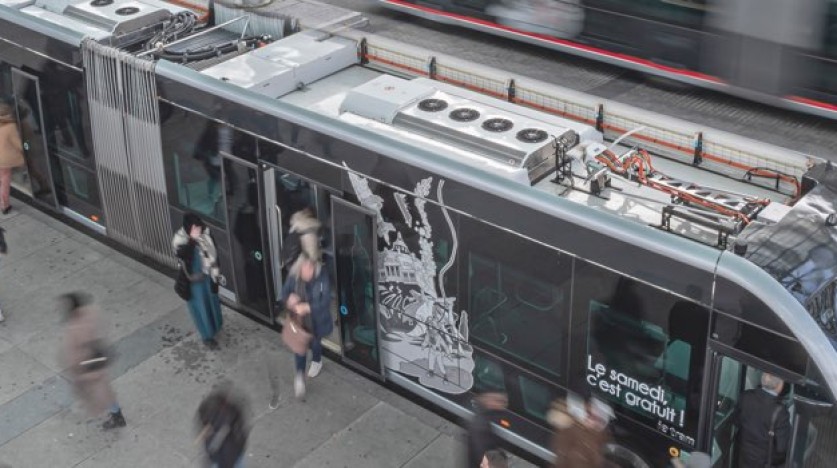
EDF is committed to making very low-carbon electricity the fuel of the future
The transport sector is now the biggest contributor to greenhouse gas emissions in Europe. Against this backdrop, low-carbon electricity is the solution of the future for clean transport. Driving an electric car means 5 times fewer CO2 emissions than a combustion engine (1)!
With a 99% CO2-free energy mix in France (2) by 2025, EDF has a major role to play.

Your browser does not support javascript.
To enable you to access the information, we suggest you view the video Driving electric means 5 times less CO2 in a new tab.
[French spot on electric mobility, featuring the choice of a woman hitchhiking].
Eva is hitchhiking in the middle of an isolated landscape, a large rucksack beside her. She looks like she's been waiting a while.
A slightly older car approaches and stops in front of her. Inside, a charming old lady smiled warmly at her. The engine roars loudly, letting out a puff of smoke from the exhaust. Eva sighs, slightly annoyed, and refuses to get in.
Eva declines the invitation.
Then a second car pulls up - a 4x4 convertible. Inside, 3 ridiculously attractive surfers. The driver, a typical blonde surfer cliché, leans towards her. Eva hesitates for a second-this time with a hint of regret in her voice.
Eva declines again.
The surfers drive off, leaving a cloud of smoke behind them.
Then another car pulls up, completely silent.
Inside, four hooded gangsters surrounded by bags of banknotes fly around them. Eva's face finally lights up! She climbs in enthusiastically and we see her drive off, in the back seat of the car between 2 of the gangsters.
A text appears: driving electric means five times less CO2. (note: than with a combustion engine. Transport & Environnent study, 2022, page 1. Average over the entire life cycle of the vehicle. More information on edf.fr/mobilite-electrique)
EDF, electricity, it's only just begun. Energy is our future, save it!
EDF and electric mobility
Faced with the challenge of energy transition, reducing energy consumption and cutting CO2 emissions are two major issues for EDF customers, whether they are individuals, businesses or local authorities.
For the EDF Group, the development of electric mobility is in line with its raison d'être: building a CO₂-neutral energy future, reconciling preservation of the planet, well-being and development, thanks to electricity and innovative solutions and services.
The EDF Group is positioned as one of the pioneers in this field, and has been interested in EVs and their impact on the electricity system since the late “60s”. In the early '70s, EDF R&D tested the first electric 4L prototypes with Renault at the EDF lab in Les Renardières. Since then, EDF R&D has never stopped contributing to the development of EVs and batteries for electric mobility.
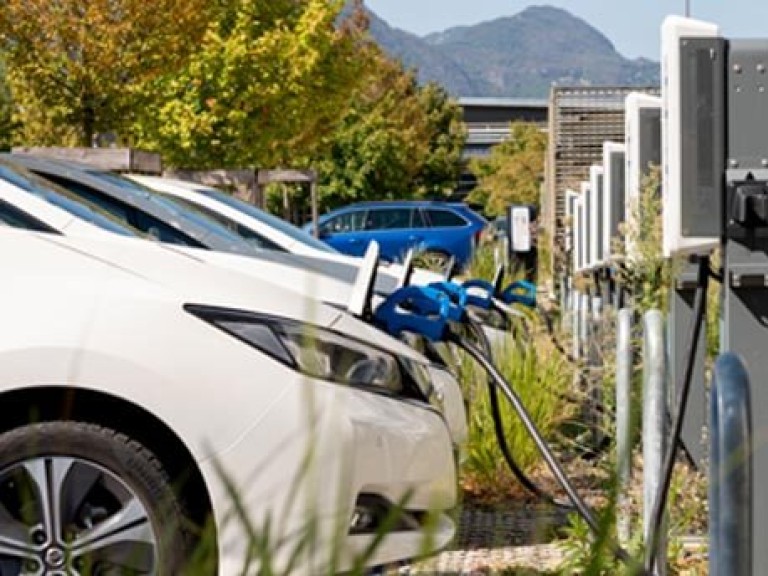
A player in fast-charging
Charging behavior is changing as more and more electric vehicles are offered for long-distance journeys. It is therefore essential to offer electric vehicle users charging solutions adapted to different types of use. Ultra-fast charging solutions are a fast-growing segment in which the EDF Group has decided to position itself. In concrete terms, users will be able to recharge their electric vehicles in the parking lots of certain retail outlets while shopping, going to the cinema or eating out.
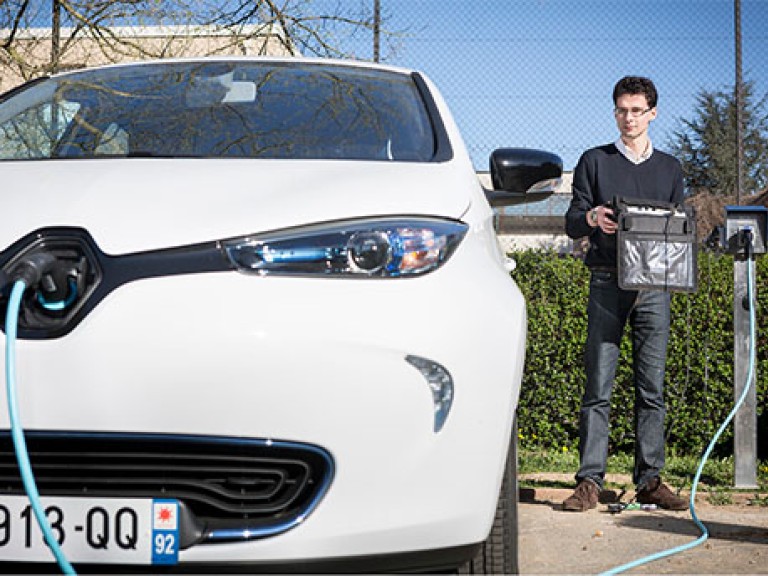
EDF Group launches Europe's first bi-directional charging demonstrator
Supported by the European Innovation Fund, this project for electric mobility will enable the deployment of 800 vehicle-to-grid (V2G) charging points.
A player in smart charging
The development of electric mobility requires smart charging solutions. With V1G smart charging, the charging of electric vehicles is controlled according to the periods when the electrical network is least busy, enabling the user to benefit from attractive prices and low-carbon energy.
In its most advanced form, vehicle-to-grid (V2G), smart charging even transforms the vehicle into a reservoir of electricity.
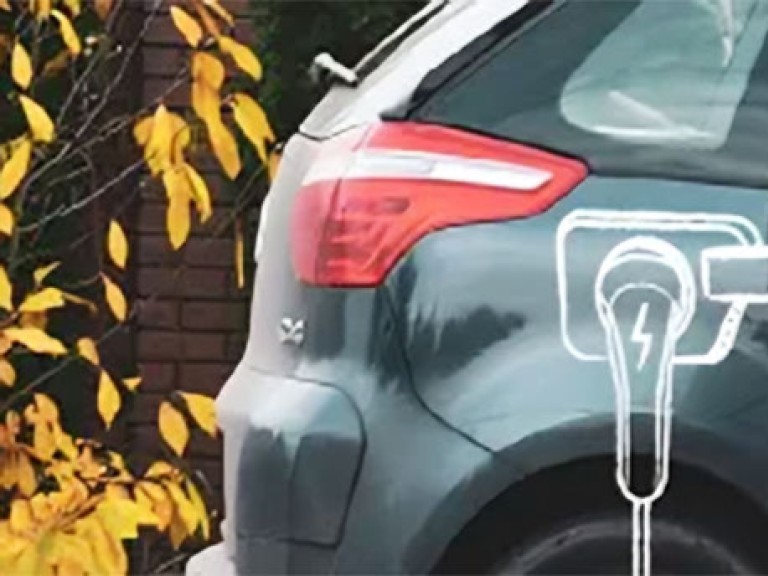
A player in home solutions
The EDF Group has made electric mobility a major focus of its low-carbon strategy. The 1st challenge is to support the rapid growth of the electric vehicle market, which will help to decarbonise transport: the EDF Group has positioned itself in the supply of electricity with offers adapted to EV recharging and in electric vehicle recharging infrastructures. These two elements are key to the success of the transition from internal combustion vehicles to electric vehicles, which offer many advantages. Driving on electricity is 4 times cheaper than driving on fuel (3)! Everyday savings, lower CO2 emissions and less dependence on fossil fuels... Individually and collectively, we have everything to gain from the electric car.
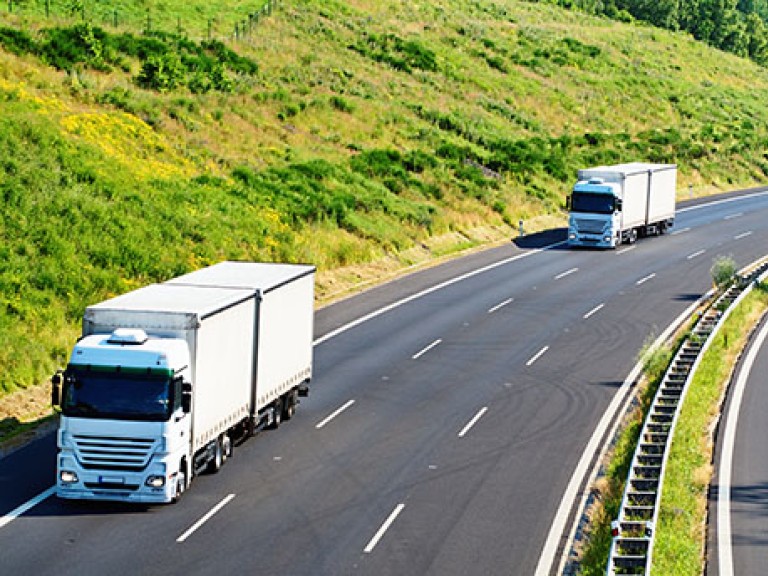
Towards low-carbon, heavy-duty mobility
Responsible for a quarter of CO2 emissions in France (4), road transport of people and goods is a major area for decarbonisation. Against this backdrop, the EDF Group offers comprehensive support, combining technical expertise, appropriate recharging infrastructures, intelligent control services and financing solutions. Through its specialised subsidiaries, it supports the sector's players in the energy transition and develops tailor-made solutions.
Transcription
Exemplary player: 100% of EDF's fleet of light vehicles will be electric
EDF is the first French company to join the EV100 initiative, spearheaded by the international non-profit organization The Climate Group. The EDF Group is committed to converting its entire light vehicle fleet to electric in France by 2030, thereby contributing to the development of a low-carbon society and the energy transition.

Your browser does not support javascript.
To enable you to access the information, we suggest you view the video Exemplary player: 100% of EDF's fleet of light vehicles will be electric in a new tab.
Provider of your mobility
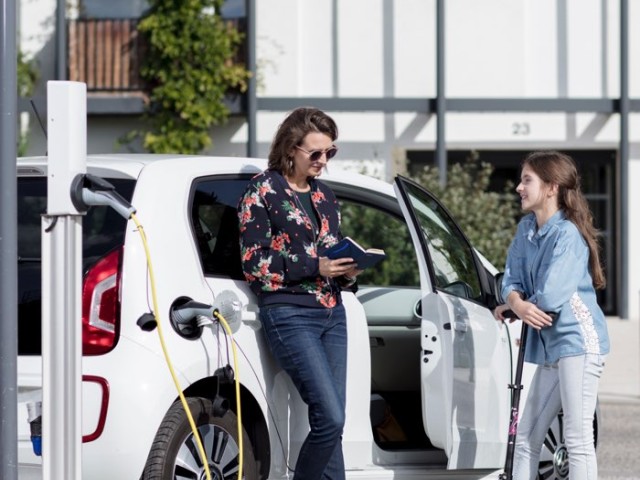
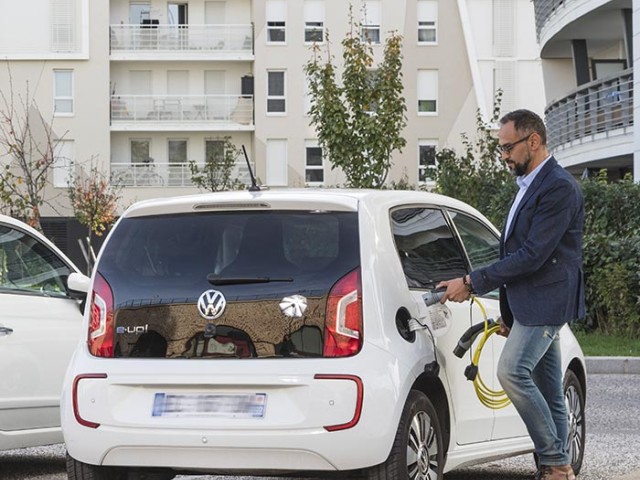
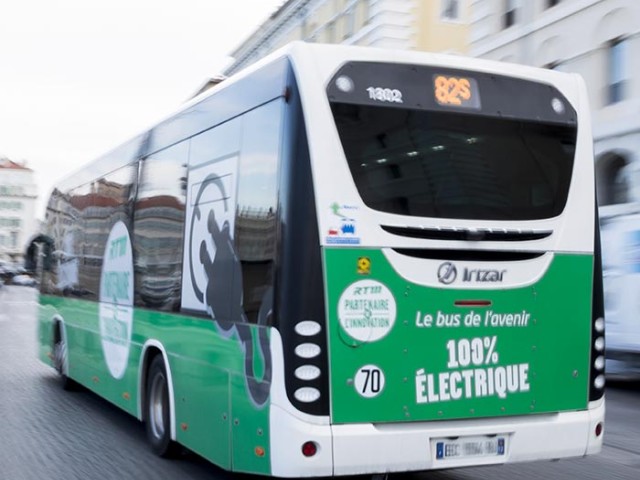
Electric mobility is already a reality. Whether you're an individual, a business or a local authority, EDF offers you dedicated packages that include low-carbon electricity supply and charging solutions.
(1) French Ministry for the Ecological Transition, “Electric Vehicles: Fact or Fiction”, October 2025, page 1 [In French]. Average over the entire life cycle of a 100% electric vehicle.
(2) Direct CO₂ emissions, linked to production, excluding life cycle analysis (LCA) of production facilities and fuels - EDF SA perimeter, at 31/12/2025. Source: Universal Registration Document (URD) 2025 of the EDF Group.
(3) Source: EDF R&D – September 2026. Electric city car consuming 17 kWh per 100 km (including charging efficiency losses) and charged 80% of the time at home during off-peak hours under the regulated electricity tariff effective from 1 August 2026. Electricity price: €0.1589/kWh during off-peak hours and €0.2142/kWh during peak hours. Petrol city car consuming 6.3 litres per 100 km. Average SP95 petrol price between August 2025 and July 2026 (INSEE): €1.88 per litre. Cost ratio per 100 km: €11.84/€2.89 = 4.1 times.
(4) Key Transport Figures in France, 2025 Edition, French Ministry for Territorial Planning and the Energy Transition, page 8.