

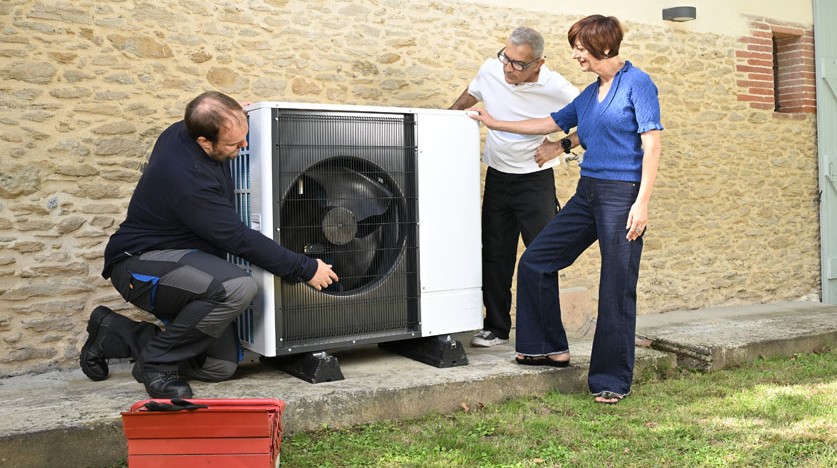
EDF and its subsidiaries support you at every step, from a tailored study to installation of your heat pump, ensuring winter- and summer-time comfort and lower energy bills.
Why choose a heat pump?
A heat pump is a responsible alternative to heating and heat-production systems that use fossil fuels (gas, oil, coal, etc.). Powered by electricity, it captures the calories naturally present in the air, water, or ground to heat or cool buildings. It is ecological and efficient, and significantly reduces energy consumption and CO₂ emissions.
Heat-pump consumption: performance that makes a difference
-
Economic

50% to 70% savings on your annual heating consumption (1)
-
Ecological

Up to 90% fewer CO₂ emissions (2)
(when replacing oil or gas boilers) -
High-performing

4 times more heat produced than electricity consumed (3)

How does a heat pump work?
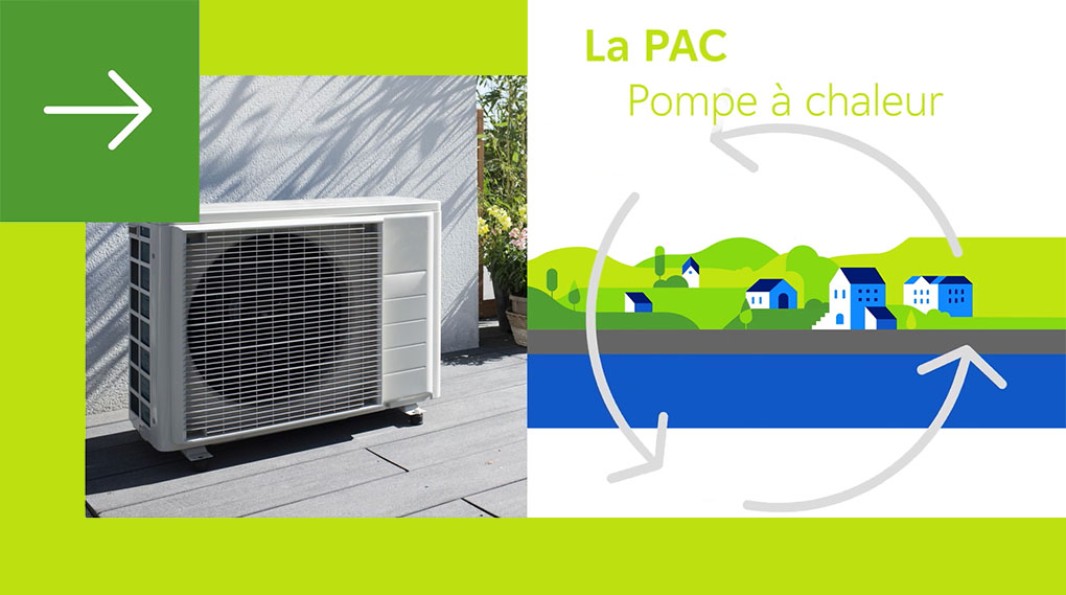
A heat pump captures heat or cold from the air, water, or ground and transfers it indoors via a thermodynamic circuit. There are several types of HPs: aerothermal heat pumps (air-to-air, air-to-water) and geothermal heat pumps (water-to-water).
For households, it provides space heating, domestic hot water, and cooling depending on the model. For businesses and local authorities, it heats large volumes and optimizes industrial heat.
Your browser does not support javascript.
To enable you to access the information, we suggest you view the video La pompe à chaleur : un chauffage économique et écologique in a new tab.
What are the advantages of a heat pump?

For your home
Heat pump: more thermal comfort and savings
Choosing a heat pump means choosing economical and ecological heating. By using renewable energy, it can cut your heating budget by up to 50% compared with a gas or oil boiler (1). It delivers optimal comfort all year and can cool your home in summer. Eligible for financial aids such as MaPrimeRénov’ or EDF’s Energy Bonus, its installation cost is reduced.
For your professional and public buildings
Heat pump: a lever for energy efficiency
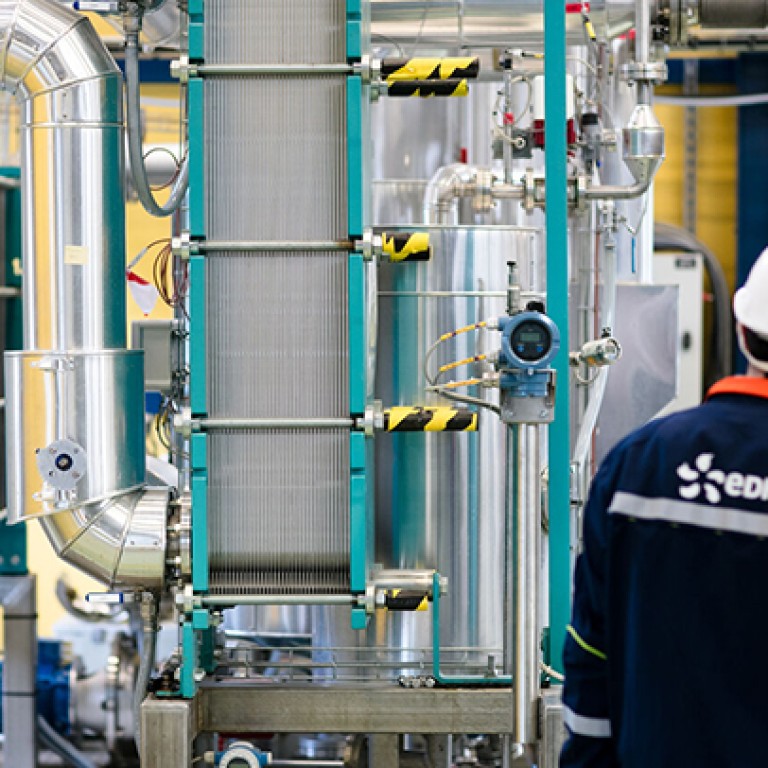
A heat pump is also a strategic solution for companies and municipalities seeking to improve energy performance, lower operating costs, and support the energy transition. In industrial or tertiary settings, a heat pump can heat large volumes, supply heat networks, or optimize industrial processes by recovering waste heat.
Go further with heat pumps
Housing, public infrastructure, tertiary or industrial sites: every building has a suitable heat pump. Discover project examples showing their effectiveness for constructing and renovating low-carbon buildings.
(1) EDF source — February 2025 — Estimated average gain on heating: 50% to 70% reduction in annual heating consumption, i.e. up to 45% savings on the heating budget (specifically, up to 37% on the gas budget and up to 45% on the oil budget) by replacing an end-of-life gas or oil boiler with an air-to-water heat pump. VAT-inclusive gains observed over the last three years for a customer in a moderately insulated detached house with an average heating need of 15 MWh/year, calculated using the following tariffs: regulated electricity tariff TRV Base option, CRE reference price (gas), and SDES data (heating oil). Heating period from October 1 to May 1. Actual savings may change regularly with economic and regulatory conditions.
(2) Up to 90% less CO₂ compared with an old gas or oil boiler. Source: EDF R&D, June 2024 — Calculations of gains on space heating and domestic hot water for a poorly insulated 1955 single-family house, 100 m², Zone H1.
(3) Source : librairie.ademe.fr - Comment choisir sa pompe à chaleur ?