

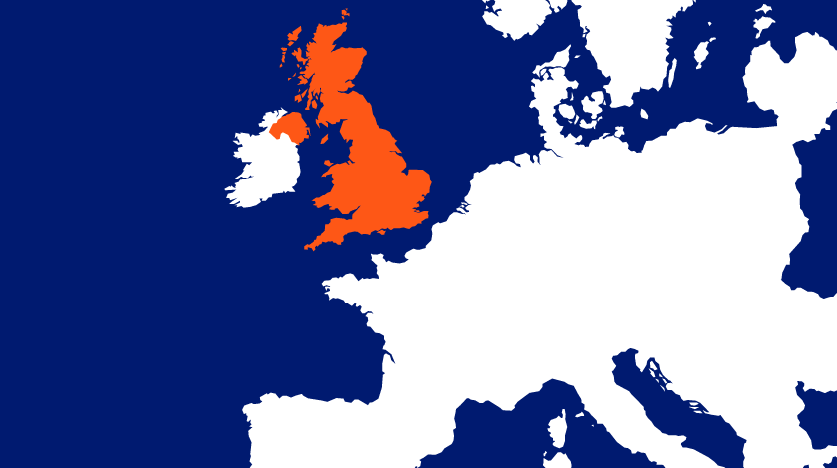
 Manchester, London, Brighton, Gloucester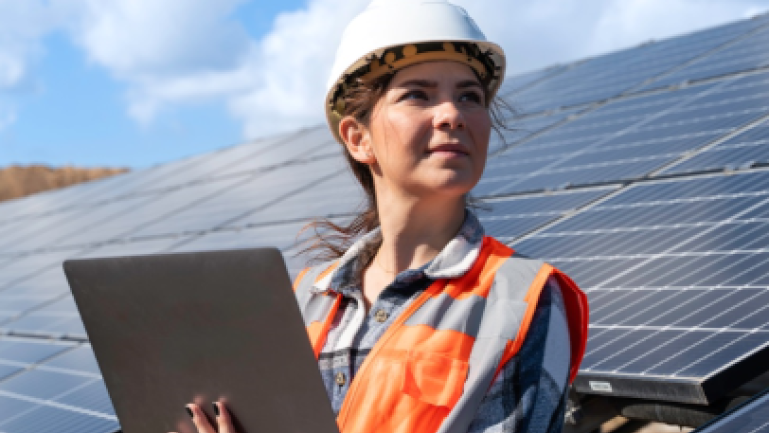
Main research areas
- Nuclear
- Flexibility & Energy Storage
- Industrial Decarbonization
- Offshore Wind
- Artificial Intelligence
Missions et activities
Duration : 1min14
Your browser does not support javascript.
To enable you to access the information, we suggest you view the video R&D UK in 60 seconds in a new tab.
[This animated film presents EDF UK R&D’s work in nuclear energy, renewable energy, energy systems and digital innovation. It supports the UK’s low-carbon ambitions and collaborates with leading UK universities to accelerate the transition to “Net Zero”.]
Our missions
Support EDF UK’s operational business units and subsidiaries.
Contribute to the EDF Group’s R&D ambitions.
Leverage the UK’s research and innovation ecosystem.
Create synergies between EDF UK and the EDF Group:
- More than 100 researchers
- More than 20 PhD students
- More than 25 nationalities
- Across 4 sites: London, Hove, Gloucester and Manchester
5 key academic partners:
- University of Manchester
- University College London
- University of Bristol
- Imperial College London
- University of Sheffield
The teams are organised into 4 areas of activity:
- Nuclear
- Renewable energy
- Energy systems
- Digital innovation
EDF UK E&D conducts research and innovation activities to help Great Britain achieve its “Net Zero” target.
Focus on...
Transcription
La R&D vous emmène, the FLASH project
FLASH is a project led by EDF’s R&D team in the UK, after EDF was selected by the UK government to trial new tariffs and flexibility offers. What is at stake? Testing new solutions to help UK households reduce their electricity bills while lowering their carbon footprint, as well as assessing the added value of flexibility provided by the residential sector to electricity systems. R&D takes you into the field to discover this project…

Your browser does not support javascript.
To enable you to access the information, we suggest you view the video La R&D vous emmène, the FLASH project in a new tab.
[This report presents the FLASH project, through which EDF UK R&D is developing practical solutions to make homes smarter and more flexible. It features Cécile Geier, Flexibility Strategy Manager at EDF R&D UK.]
FLASH: a project combining electricity system flexibility and smart homes
The UK needs to move towards a smarter and more flexible energy system if it is to achieve carbon neutrality by 2050. As the electricity system evolves, EDF R&D engineers in the UK are working with the customer team to address this challenge, which requires a complete rethink of energy consumption at home.
Cécile Geier: The FLASH project stands for “Flexibility Assets and Smart Homes”. It is an innovation project funded by the UK government. Its aim is to enable consumers to reduce their electricity consumption and save money, while focusing on flexibility to ensure grid stability.
R&D plays a key role in the FLASH project. We are responsible for analysing and assessing the impact of the five trials, as well as coordinating the project between all the partners and the government.
After simulating and developing five flexibility propositions, we are now entering the large-scale testing phase, involving more than 2,000 customers in 2024 and 2025.
First trial: Beat the Peak
Cécile Geier: Our first trial, called “Beat the Peak”, has been launched. The aim is to encourage customers to use electricity during off-peak hours. In return, their electricity is free on a Sunday.
Second trial: HeatSmart Tariff
Cécile Geier: The “HeatSmart Tariff” trial focuses on heat pumps and hot water storage. Customers are offered a three-tier tariff and an app that allows them to set their preferences and see how their heat pump is being optimised.
Third trial: Sunshine Saver
Cécile Geier: We are installing solar panels on social housing properties so that our flexibility solutions are accessible to everyone, regardless of their financial circumstances. Some social housing properties are also equipped with a battery. When electricity prices rise on the grid, residents can use the electricity stored in their battery to power their homes. This is known as self-consumption.
Fourth trial: EV OptiCharge
Cécile Geier: The “EV OptiCharge” trial enables electric vehicles to be charged at specific times to reduce demand on the grid. Customers can opt for a cheaper off-peak tariff and set their preferences in the app. This allows EV charging periods to be adapted to their needs.
Fifth trial: Go Electric Flex
Cécile Geier: When electricity prices surge, customers can rely on their solar panels to charge their batteries, and then use the electricity stored in the batteries to meet their home's energy needs.
We are actually standing outside Kevin’s house, as he is taking part in this trial.
[Cécile Geier introduces herself outside Kevin’s house. He opens the door and welcomes her.]
Cécile Geier: I heard that you had a V2X charging point installed. I’d love to see it.
[Kevin takes her to see the charging point, installed on one of the walls of his house.]
Kevin: I personally decided to decarbonise my home and my transport. I started with solar panels and an electric car, and then my air-to-air heat pump allowed me to move away from gas.
[We see the roof of Kevin’s house covered with solar panels, followed by his heat pump.]
Kevin: When I heard about this trial, I immediately wanted to take part. It makes perfect sense to charge your car using solar panels or during off-peak hours at a reduced price, and then offset household consumption using the car’s battery — in other words, using it to power the house. This technology is fantastic, and I hope it will become widespread very soon.
Cécile Geier: Could you show me how it works in practice?
Kevin: Yes, of course.
[Kevin opens the car’s charging unit, plugs in the charger and presses a button.]
Kevin: I open the car’s charging unit and plug in the bidirectional charger. I’ve already set my charging periods via the Smart Portal, so all I have to do is press the on/off button.
Cécile Geier: Perfect, thank you for the demonstration.
With the FLASH project, we are very proud to contribute to the development of a smarter and more flexible energy system.
Researchers’ portraits
Transcription
Jordan MURKIN
Meet Jordan MURKIN, Digital Innovation Manager at EDF’s R&D centre in the UK.

Your browser does not support javascript.
To enable you to access the information, we suggest you view the video Jordan MURKIN - Brighton - EDF R&D UK Center in a new tab.
Researchers from here and elsewhere takes you to meet Jordan Murkin, Digital Innovation Manager at EDF’s R&D centre in the UK.
Jordan Murkin: Hello, my name is Jordan. I work here in Brighton, UK, as Digital Innovation Manager at EDF’s R&D centre in the UK.
[The Axiom]
Question: What do you actually do as part of the Digital R&D team in Brighton?
J.M.: I lead a team that explores how digital technology could potentially transform the energy sector. My team consists of two groups: a data team and a development team.
The data team explores technologies such as deep learning, computer vision and natural language processing.
The development team focuses on the technological side of digital innovation, exploring and building tools using emerging technologies such as virtual reality and blockchain, while also supporting the digital transformation of our business.
We work with all of EDF Group’s business units (BUs) and with all activities that we believe could benefit from our work.
We work with our colleagues in call centres, engineers at nuclear power plants, our French colleagues working on renewable energy, and we collaborate with international centres around the world.
[The Centre]
Question: Can you describe it and explain its missions?
J.M.: EDF’s R&D centre in the UK consists of five teams: Digital Innovation (my team), Smart Customers, Renewable Energy, Nuclear and Net Zero Innovation.
The mission of our R&D centre is to support EDF’s Local Energy business here in the UK, helping it deliver services to customers, supporting engineers in energy generation, and contributing to the construction of new power generation facilities such as Hinkley Point C.
To achieve this, one of the principles of our R&D centre is to stay closely connected to the business. This means working alongside our EDF colleagues and making sure we understand how they work and the challenges they face.
[The Alchemy]
Question: How does this come across in your team?
J.M.: I really like the atmosphere within my team. Everyone brings their own way of working, with enthusiasm and passion for what we do. Everyone is encouraged to share their ideas, and there is a real sense of collaboration and team spirit.
We operate like a start-up within EDF, with our own methods, culture and technologies, right down to our own ways of organising meetings and projects.
[The Intersection]
Question: What made you choose this career path?
J.M.: During my university studies, I chose to take an industrial placement, which meant working for a company for a year while continuing my studies.
I decided to apply to EDF. For me, it was a company that would truly enable me to achieve my goals, namely making our lifestyles more sustainable, or at least improving them.
At the end of my placement, I immediately returned to EDF, this time as a PhD student, working for the company alongside my doctoral studies.
My research focused on exploring blockchain technology and what it could bring to the energy sector. It was fantastic to see the results of my work in the hands of customers and to visit them in their homes to find out how we could help them.
At the end of my PhD, I joined EDF full-time as a developer. I then became the team’s lead developer, and this year I was appointed to lead the team itself as Digital Innovation Manager.
[The Median]
Question: What are your passions? How do you find your personal balance?
J.M.: A few years ago, I bought my home, which needed quite a bit of work. So, much of my free time over the past few years has been spent renovating it. I really enjoy music and going to concerts, so you’ll often see me rushing off at the end of the day to go to a concert after work. This year, I even managed to go to four or five festivals, including Glastonbury for the first time. It’s a truly spectacular festival.