


Supercomputers: the right formula for the future
With CRONOS now operational, the EDF Group has a phenomenal computing capacity of more than 11 petaflops, enabling it to perform eleven million billion operations per second! But what lies behind these astronomical figures? And what role will supercomputers play in shaping the future of the EDF Group? Alain Martin, Head of Scientific IT at EDF R&D, provides some answers.
Also known as HPC (High Performance Computing), a supercomputer consists of a set of processors capable of performing billions of operations per second, much like thousands of desktop computers working together. Over the past decade, their computing power has increased tenfold, and the EDF Group, a pioneer in this field, has successfully embraced this technological shift.
The latest HPC system, CRONOS, was commissioned in March 2021 and is shared with Nuclear Engineering and FRAMATOME. It ranks 8th in France in terms of computing power and 67th worldwide. Together with GAÏA (3 petaflops), which is dedicated entirely to R&D, it provides nearly 650 million computing hours per year for R&D, which accounts for almost three-quarters of the total installed computing power.
According to Alain Martin, such extensive use is only natural:
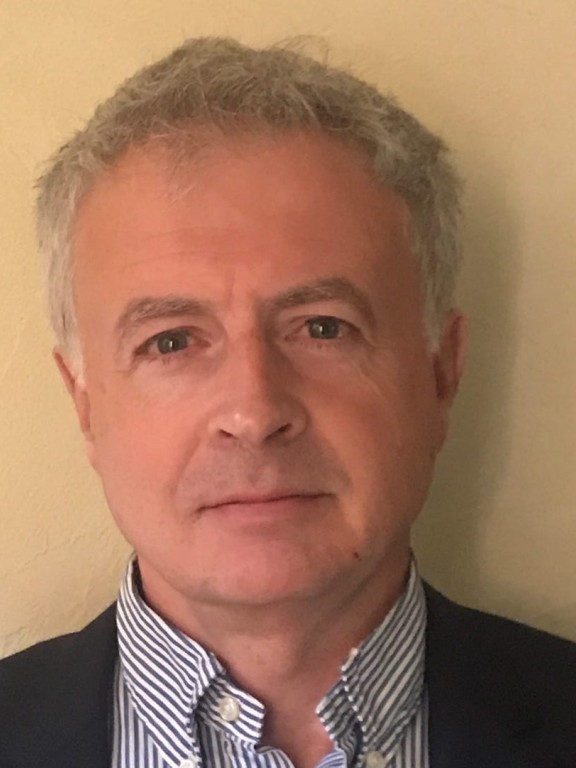

We work on a wide range of cross-disciplinary topics, covering an extremely broad spectrum of activities. We are constantly seeking innovation, and the main tools that rely on HPC are developed in-house by EDF R&D.
HPC Serving Artificial Intelligence

Some of the tools developed by EDF R&D rely on artificial intelligence (AI). The success of AI is intrinsically linked to the performance of supercomputers: “They are essential, particularly in numerical simulation. As our production facilities age, they generate increasingly large amounts of data. To process this data, together with data from numerical simulations, within reasonable timeframes, we need tools such as AI, as well as substantial computing power.” The convergence of AI and HPC offers benefits on many fronts: “It will enable our teams to continue to innovate, improve reliability, enhance performance and support decision-making, and it will be particularly valuable in addressing the various safety challenges. HPC and artificial intelligence enable us to process enormous volumes of data, which should help us better understand the challenges facing tomorrow’s electricity system, shaped by our new generation technologies, changing consumption patterns and future climate change.”
Upstream…
One of EDF R&D’s key responsibilities is to help ensure the long-term sustainability of the EDF Group’s various generation assets, particularly its nuclear fleet.
HPC has a decisive role to play in achieving this goal: “As our production facilities age, we will need to do more to guarantee their safety and demonstrate to safety authorities that their operating lives can be extended. To do so, we will need even greater precision in solving our equations, enabling us to improve our understanding of the complex physical phenomena we study and obtain more predictive, more reliable and more innovative simulations, while also opening up new areas of research. Supercomputers will prove essential in gaining and safeguarding our safety margins.”
… and Downstream of the Meter
Supercomputers are also useful downstream of the electricity meter, benefiting consumers through applications such as smart grids. These intelligent electricity networks adjust power flows in real time, and their operation would not be feasible without substantial computing power.
EDF R&D also uses HPC to provide the Group’s various business units with tools to make better use of electricity: anticipating changes in French and European electricity services, guiding portfolio structuring and developing flexibility solutions! It therefore develops optimisation tools designed to ensure supply-demand balance. As Alain Martin explains: “HPC makes it possible to process vast amounts of data and develop and validate applications and tools for departments such as the Upstream/Downstream Optimisation & Trading Division (DOAAT), helping to maintain the physical balance between electricity supply and demand at the lowest possible cost while minimising risks.”
EDF R&D’s Major Challenges: Pushing HPC to the Limits of What’s Possible
Before each new supercomputer is deployed, EDF R&D launches its “grand challenges.” The idea? To give certain research teams the opportunity to use a large share of the machine’s capacity over an extended period, allowing them to carry out exploratory studies that would be impossible during the supercomputer’s normal operating time. It is also a chance to test the supercomputer’s robustness and make final adjustments before it goes into service.
Cutting-edge studies “today” to break through barriers, so that they become standard studies “tomorrow.”