

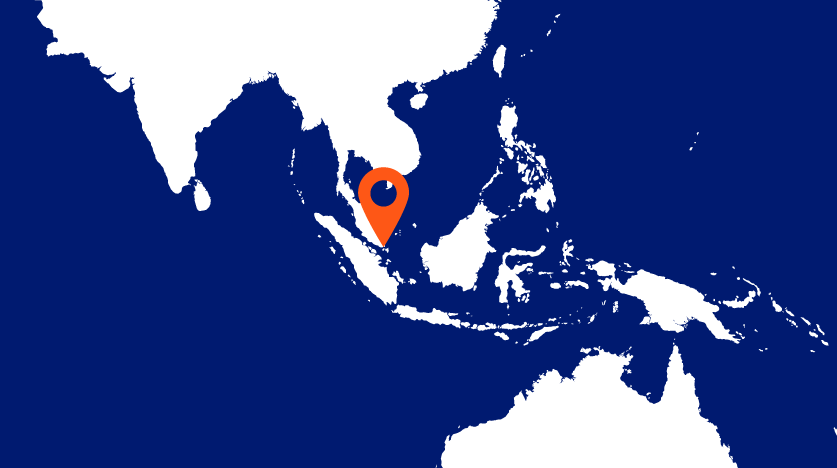
 Singapore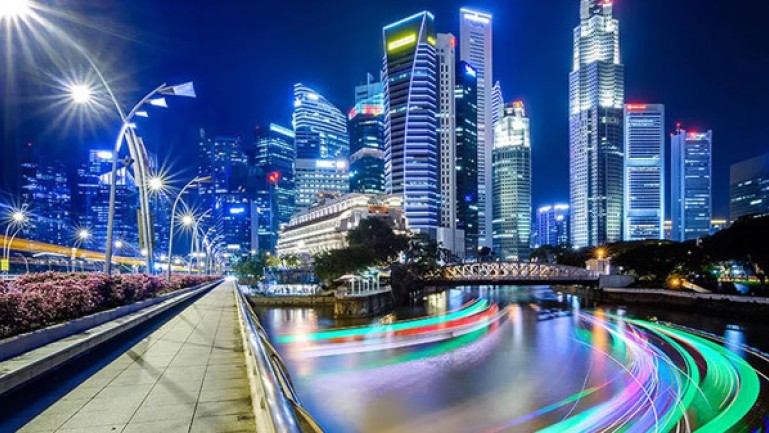
Main research areas
- Smart Grids, Microgrids and Interconnections
- Renewable Energy and Energy Storage
- Industrial Decarbonisation
- Electric Mobility
- Energy Markets
Missions et activities
Duration: 1:52
Your browser does not support javascript.
To enable you to access the information, we suggest you view the video Welcome to the EDF Asia-Pacific R&D Lab in a new tab.
[This animated film presents EDF Asia-Pacific R&D Lab, the Group’s R&D centre dedicated to smart cities and distributed energy systems (smart grids, microgrids, renewables, green hydrogen and electric mobility) serving Asian markets.]
Our missions
EDF Asia-Pacific R&D Lab is committed to research and innovation in smart cities and distributed energy systems for Asian markets.
Our activities
Interconnections
Electricity transmission, systems modelling, market knowledge and proximity, AI.
Smart Grids
Equipment assessment and testing, local innovations…
MASERA Microgrid
A microgrid in a constrained environment.
Renewable Energy
From “conventional” renewable energy to innovative solutions: floating solar, hybrid systems…
Green Hydrogen
Making hydrogen greener by integrating intelligence for industrial applications.
Electric Mobility
Advanced charging, fleet and energy management, renewable energy certificates linked to charging, heavy-duty mobility (electric boats and aircraft).
Energy Markets
Data science, optimisation and artificial intelligence for Asia-Pacific market analysis.
The EDF Asia-Pacific R&D Lab works closely with the Group’s other R&D sites in France and around the world.
Focus on...
Microgrids
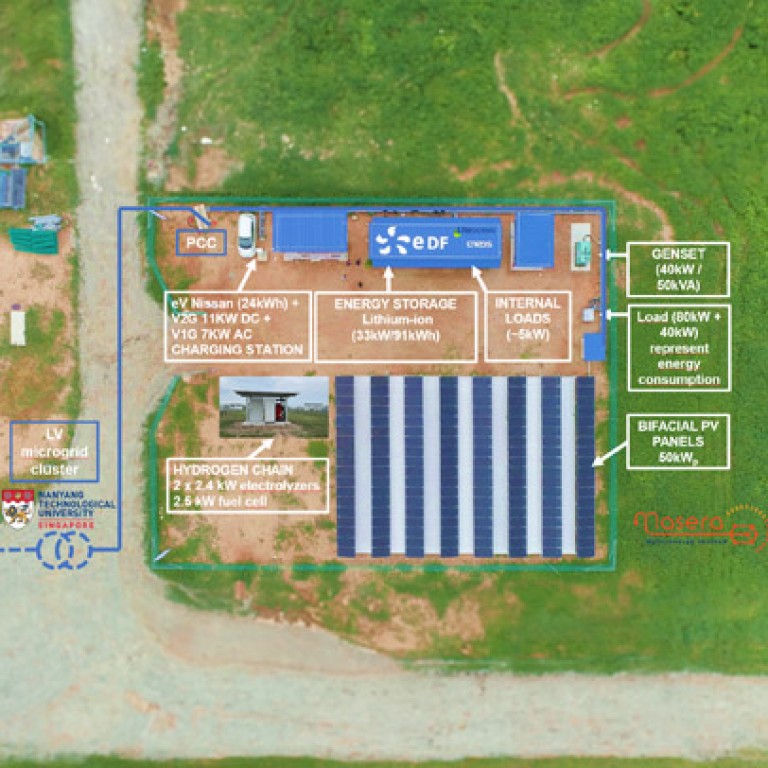
MASERA Multi-Energy Test Bench
The MASERA multi-energy test bench is part of the Renewable Energy Integration Demonstrator Singapore (REIDS) project, established by Nanyang Technological University to support the socio-economic development of Southeast Asia (SEA) and the expansion of microgrids, particularly in remote areas.
Its objective? To de-risk technologies and develop smart solutions: interconnections, energy management systems, electric vehicle charging and V2G, low-carbon hydrogen and its management, renewable energy certificates, 24/7 decarbonised energy, and much more…
Researchers’ portraits
Transcription
Huajun ZHANG
Meet Huajun ZHANG, who is responsible for e-mobility and energy systems at the EDF Asia-Pacific R&D Lab in Singapore.

Your browser does not support javascript.
To enable you to access the information, we suggest you view the video Huajun ZHANG in a new tab.
Researchers from here and elsewhere takes you to meet Huajun Zhang, who is responsible for e-mobility and energy systems at the EDF Asia-Pacific R&D Lab in Singapore.
Huajun Zhang: Hello everyone, I’m Huajun from the EDF Asia-Pacific R&D Lab in Singapore.
[The Axiom]
Question: How did you get to where you are today?
Huajun Zhang: I obtained my PhD from Nanyang Technological University in 2020. I stayed there to work as a researcher for two and a half years. Then, at the end of July last year, I joined the EDF Asia-Pacific R&D Lab.
I mainly work on e-mobility and energy systems. In particular, I work on e-mobility projects involving smart charging, Vehicle-to-Grid and the electrification of the maritime sector.
As you may know, Singapore is the world’s second-largest port. The country has committed to reducing greenhouse gas emissions from ships.
We work closely with local research centres, start-ups, companies and authorities to decarbonise the maritime sector.
We work on charging infrastructure, renewable energy for charging, as well as optimisation strategies.
In energy systems, I work on microgrids, grid interconnections, improving flexibility, renewable energy certificates and system reliability.
[The Alchemy]
Question: How does this alchemy manifest itself within your team?
Huajun Zhang: Around 15 people work at the Lab. We sometimes have interns, so the teams change quite often.
Within the Lab, we focus on open and effective communication. This includes project meetings, regular team meetings and management meetings, as well as informal conversations over coffee or lunch.
For teamwork to be effective, it is crucial to understand each other’s working habits and backgrounds.
And, as I just mentioned, clear communication is essential to avoid misunderstandings.
Sometimes we go out for a drink or do sports together.
[The Spark]
Question: What do you like most about your work?
Huajun Zhang: I enjoy my work first and foremost because I take part in projects with other R&D centres. I enjoy collaborating with different people and learning and developing every day.
Secondly, our work has a tangible impact on consumers. I’m the kind of person who constantly asks myself: “What is the purpose of this?” And I know exactly what we are working towards.
[The Median]
Question: What are your passions? How do you find a balance in your personal life?
Huajun Zhang: I’m passionate about my work, but I also have leisure activities that help me maintain a healthy balance in my life. Generally, I’m very focused on my work and I try to be efficient.
[The Intersection]
Question: What made you choose this path?
Huajun Zhang: I thought a lot about my career prospects during and after my PhD. I realised that I wasn’t sure I wanted to pursue a career in research, so I decided to join a company. It helped me realise my value and fulfil my potential. Working on projects to solve concrete problems, such as CO2 emissions, is very rewarding. I feel that I’m having a positive impact.
Transcription
Christophe NAPPEZ
Meet Christophe NAPPEZ, Head of Grid Networks and Renewable Energy at the EDF Asia-Pacific R&D Centre in Singapore.

Your browser does not support javascript.
To enable you to access the information, we suggest you view the video Christophe NAPPEZ in a new tab.
Researchers from here and elsewhere takes you to meet Christophe Nappez, Head of Grid Networks and Renewable Energy at the EDF Asia-Pacific R&D Centre in Singapore.
Christophe Nappez: Hello, I’m Christophe Nappez. I’m Head of Grid Networks and Renewable Energy at the EDF Asia-Pacific R&D Centre here in Singapore.
[The Axiom]
Question: How did you get to where you are today?
Christophe Nappez: I studied astrophysics before completing an MBA at ESSEC, and I spent five years working in Japan for a photovoltaic panel manufacturer.
I have a team of six people. We work on grid-related topics, namely transmission and distribution, as well as renewable energy such as floating solar. Our geographical scope covers the whole of Asia and the Pacific, with the exception of China.
We are looking to develop partnerships with universities in the region. In particular, for the time being, in Singapore, but also in Vietnam and Australia.
[The Centre]
Question: Can you describe it and explain its missions?
Christophe Nappez: There are around 15 of us. We work on a wide range of topics. In addition to what I have already mentioned, we also work on electricity markets, hydrogen, electric vehicles and everything related to electric mobility, such as electric boats.
We act as a link with the other R&D centres in France and in other countries around the world.
[The Spark]
Question: What do you like most about your work?
Christophe Nappez: Working in a multicultural team requires a great deal of listening. You need to know how to engage in dialogue with others and give them time to explain themselves. There is the language barrier, but there are also very different cultures and different ways of expressing ourselves. And that is fascinating.
[The Alchemy]
Question: How does this manifest itself within your team?
Christophe Nappez: We are a multidisciplinary team, but each of us has our own area of expertise. We work together here, as well as with France and other countries, to create synergies between colleagues and across different topics. These synergies help drive greater innovation. There is a really great atmosphere within the team.
[The Median]
Question: Passions, work-life balance
Christophe Nappez: In my free time, apart from exploring Singapore and the region, I enjoy writing. As it happens, I wrote a novel that was published by L’Harmattan. It’s called L’île mécanique. Feel free to order it.